Welcome back my fellow radiation nerds! Today we will dive deep into what is arguably one of the best radiation meter out there, the Ludlum Model 3!
The history of Ludlum Meters
The Ludlum Measurements, Inc. was established in 1962 by Don Ludlum, who was an engineer with a background in designing radiation detection equipment. Not long after, it has produced its first commercially available meter, Ludlum Model 2. Ludlum’s official YouTube channel has a very interesting video on one of the very first units ever made with a serial number of 31, which I have linked in the description below.
His meters quickly gain popularity and good reputation for their reliability and long use life, which quickly established Ludlum Measurements as a trusted name in the world of radiation detection. The success of the initial models paved the way for the development of a wide range of survey meters and radiation detection equipment that continues to be used around the world to this today.
The versatility of Ludlum Meters.
Ludlum meters are the go to meters for many scientists and first responders, because of they are extremely rugged, reliable and easy to use design. Furthermore, Ludlum Measurements offers a wide range of probes and accessories which can be easily swapped out for various applications. Adding the long and proven track record, it is easy to see why Ludlum meters became the preferred choice for scientists worldwide.

Different Ludlum models
If you look at Ludlum’s product range, you will quickly realise that there are a bunch of different models out there. However for the personal use purpose, I think these are the ones worth considering.
Ludlum Model 2 – It is most basic, analog meter that Ludlum made (discontinued but can be found used). It has the 3 operating mode x0.1, x1, and x10 which might not be enough if you plan using it with sensitive detectors such as scintillator probes.
Ludlum Model 3 – A step up from Model 2. It offers extended measuring range (x100) and improved circuitry and electronics.
Ludlum Model 12 – Supports internal voltage measurement for easy switching between different probes which might require different operating voltage. For that reason, it also has an extended voltage range (400 to 2500 Vdc).
Ludlum Model 14c – Overall similar to Model 3, however it houses a small, gamma compensated GM tube which automatically operates when the scale is set to the x1000 mode.
Ludlum Model 2221 – Digital scaler/ratemeter with advanced data logging capabilities, often used for more precise and detailed measurements.
Ludlum Model 2241 – General-purpose scaler/ratemeter with a digital display.
There are plenty more of Ludlum models out there and if you want to learn more about them, I encourage you to read the detailed description on Ludlum website (click here).
Technical data and features of Ludlum Model 3
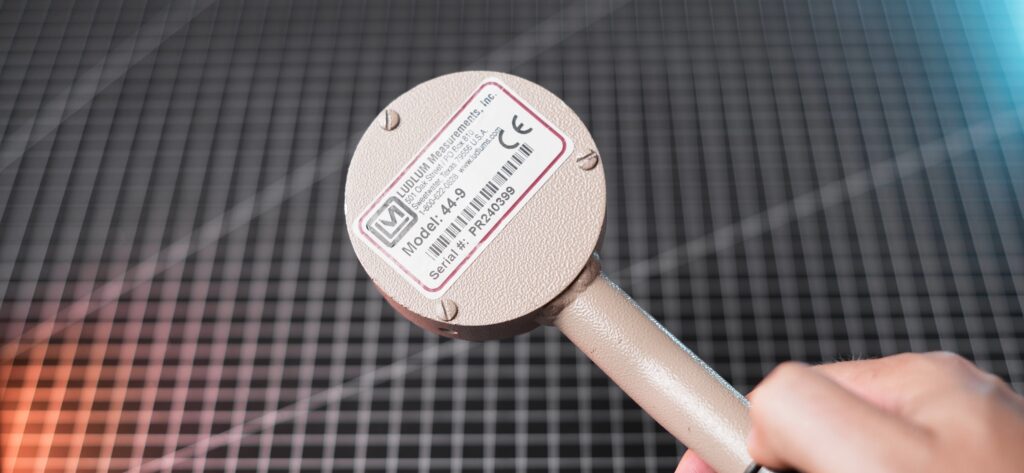
The Ludlum Model 3 has a range from 0 to 500,000 CPM and can supply voltage to the probe between 400 and 1500V. This flexibility allows it to work with a wide variety of detectors, including scintillators and some neutron detectors. Most of the time, I pair mine with a 44-9 probe, however I do change that occasionally depending on the situation
The meter features a rotary switch for selecting different measuring ranges and performing a battery test. It also includes both slow and fast averaging modes, which are particularly useful for obtaining accurate readings in varying conditions.
Powered by two D cell batteries, the Model 3 offers approximately 2000 hours of use. The batteries are housed in a separate compartment, which helps protect the electronics from potential damage in case of battery leakage. Additionally, all parts of the Ludlum Model 3 are sealed to prevent moisture from entering the meter, enhancing its durability.
These features clearly demonstrate that Ludlum meters are built to last and why they’ve earned their stellar reputation.
My Ludlum Model 3
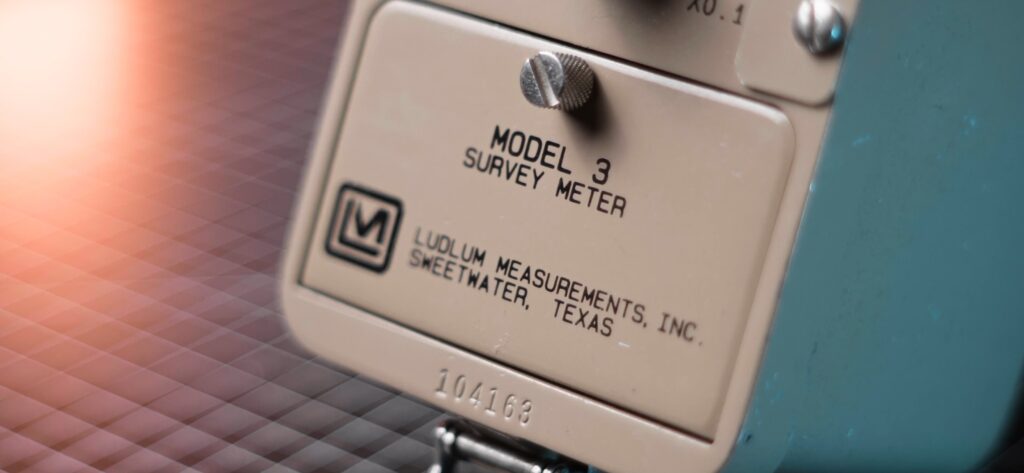
I acquired my Ludlum model 3 a few years ago, and it has been my primary meter ever since. It has a serial number of 104163 and it was manufactured on April 16th, 1992. Despite its age, it operates flawlessly, having only small scratches from regular use. In order to ensure accurate readings, I calibrated my unit using a pulser made by GEOelectronics.
My unit has meter face showing only CPM. If you have seen my previous video on how to measure radioactivity, you know I am not a fan of dose units when used to measure activity of samples, so this works perfect for me. Ludlum does offer different meter faces for different probes, however I’d still recommend to sticking with the CPM.
Originally, my meter came with a “C” type connector, which is common on most Ludlum devices. However, this connector is hard to come by in Europe, so I replaced it with a BNC connector. This modification has made it much easier to find compatible cables and probes. The meter also came equipped with latches for a strap, which, while I don’t use them often, are a handy addition for prolonged use, as the meter can get heavy. Lastly, I crafted a probe holder for my 44-9 from a sheet of metal. While it’s not the most aesthetically pleasing, it gets the job done. I’m also thinking about adding a check source holder to the side of my meter, however I can’t seem to find one for a good price.
How to buy a Ludlum meter?
So, you want to buy a Ludlum meter. But where can you find one?
If you’re set on a brand-new meter, you can purchase directly from the Ludlum website. However, be aware that their prices are generally aimed at labs and government agencies, not private individuals. A new Ludlum Model 3, for example, costs around $1,000, and that’s without any additional accessories or probes.
In my opinion, it’s a far better choice to buy a used (or refurbished) unit online. Labs occasionally clear out old inventory, and this is the best time to find used meters and probes at a relatively low price. I got my meter during one such sale for fraction of what a new one would cost me.
When evaluating a used meter, ensure it’s in good visual condition (no dents, corrosion on battery ports or cracked glass). Ludlum meters are mostly analog, making them easy and inexpensive to repair if any internal parts fail. This being said, I noticed that newer Ludlum meters are made with a PCB which use those micro components which are much harder to work with unless you have proper tools for it.
Alternatives to Ludlum
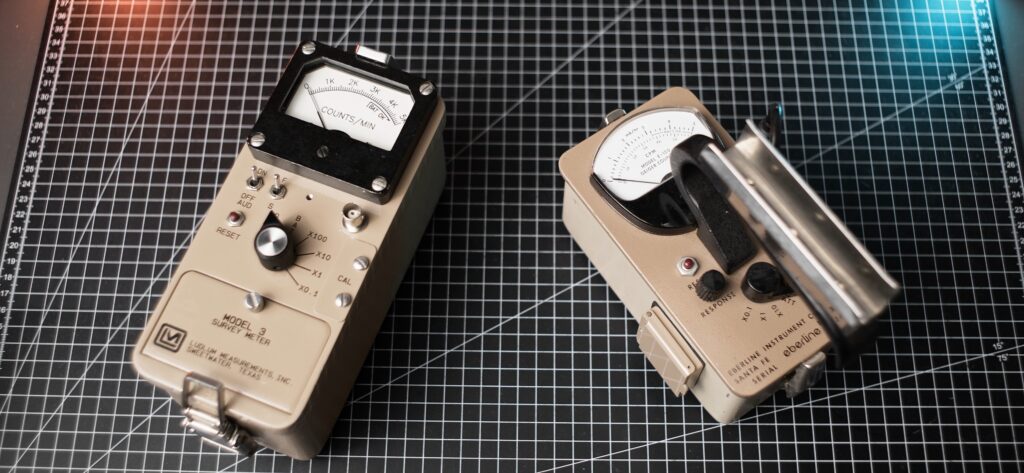
Ludlum isn’t the only company producing high-quality radiation meters. Brands like Eberline and Johnson also offer fantastic meters that are worth checking out, often at a lower cost than a Ludlum.
For example, I found my Eberline 120 survey meter (which is similar to a Ludlum model 2) that came with an HP260 probe and a check source holder for a total of 110 British pounds, including shipping!
Good deals are out there—you just need to be patient and keep an eye out, and eventually, one will pop up.
A few final words
Ludlum meters are the industry standard for a reason, and I highly recommend checking them out. Their professional build, high performance, and versatility are what led me to purchase one for myself, and I have absolutely no regrets.
I’m curious to hear about the meters you use for your measurements. Do you have, or are you planning on investing in, a Ludlum meter? Let me know in the comments!
Thank you so much for reading this post, I hope you enjoyed it and learned something new! If yes, please make sure to subscribe to the email list so that you get notified when new posts are added. Also feel free to check out my Ko-Fi page where you can donate a nice cup of radioactive coffee and support my work financially.
and remember, stay active!


1 Comment
Logan padgett · 19 July 2025 at 00:06
Hey I have a ludlum measurements 44-2 and a 44-9 that I’m trying to sell, can anyone recommend a venue?