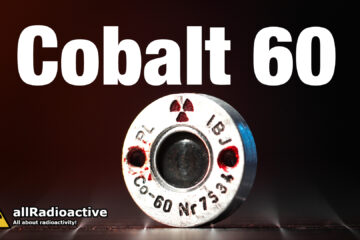
Welcome back my fellow radiation nerds! Today we will be taking a closer look at a one of the most dangerous radioactive isotopes that iso famous for the “Drop & Run” phrase. As you might have guessed by now, we will be talking about the radioactivity and uses of Cobalt 60!
Element Cobalt
The element Cobalt is a rather interesting one, humans have been using it unknowingly for centuries and it has only been officially “discovered” in 1735 by a Swedish chemist and mineralogist, Georg Brandt. The discovery of Cobalt was a major milestone for science, as it was the first metal discovered since the ancient times that wasn’t one of the seven metals of antiquity!
In its raw form, Cobalt is a hard, brittle, silvery-blue metal with atomic number of 27. In nature it has only one isotope, Co-59 which is stable. Cobalt is naturally magnetic and plays a crucial role in the production of magnets and batteries used in all modern electronics. Thanks to its very high melting point of 1495°C, Cobalt is a primary ingredient in production of superalloys used in jet engines.

While Cobalt can be found many places around the globe, it only really exists in trace amounts and there are only few location on earth where mining Cobalt is economically viable. Today, over 70% of Cobalt supply comes from the Democratic Republic of Congo and since the demand for this element only continues to grow due to the rise of Electric Vehicles and modern consumer electronics, the country has become a subject of numerous human rights violations including child labour, dangerous and unregulated working conditions and corruption.
Furthermore, the Democratic Republic of Congo’s vast mineral wealth and geopolitical significance have made it a focal point for many foreign governments and non-state actors alike who continue to fight over its natural resource control both politically and militarily.
As a result, the Democratic Republic of Congo, despite having an estimated $25 Trillion in untapped minerals, remains one of the poorest countries on earth.

The radioactive isotopes of Cobalt
Cobalt 60 is probably the most well known radioactive isotope of Cobalt. It is produced by neutron irradiation of stable Cobalt 59 in nuclear reactors and it was synthesised for the very first time in 1937 by John J. Livingood and Green T. Seaborg at the Berkeley National Laboratory. Co-60 has a half-life of 5.3 years and it decays via beta emission into stable Ni-60 and in the process, it also releases two gamma rays in rapid succession at 1173 keV and 1332 keV.


Co-60’s high energy gamma rays make it a suitable isotope for various applications including radiotherapy, sterilisation of medical equipment and in well logging devices. In all those cases, a very high activity industrial sources are used but Cobalt 60 was also used in smaller amounts for example in electronics where it was added to vacuum tubes to improve ionisation and their reliability. Since Cobalt 60 is a widely used in many industries and is also present in nuclear fallout, it is sometimes used for calibration of radiation detectors though Cs-137 is much more common for that purpose.
Cobalt-60 is also known for the famous phrase “Drop and Run” which was engraved on some industrial sources which were use for sterilisation of medical equipment. In order to achieve efficient dose rate for that purpose, these sources used jaw dropping 131 TBq of Co-60 per source making them incredibly dangerous if handled incorrectly. Kyle Hill made a fantastic video on them which I highly recommend you watch, after finishing this video .

In the 1950s, physicist Leo Szilard proposed a concept for a Cobalt bomb. Essentially was a regular nuclear weapon but added Cobalt 59. During the detonation, neutrons released from the fission of U-235/Pu-239 would activate stable Cobalt 59 turning it into radioactive Cobalt 60. This would result in the fallout being far more radioactive than from normal nuclear explosion and would make the area uninhabitable for decades. A few countries consider this idea including US, UK and Soviet Union, however none of them ended up creating a functional dirty bomb.

Cobalt has a few other radioactive synthetic isotopes but they all have short half-lives and they don’t see much use outside of scientific field.
My Cobalt 60 sources
Today finding a sample of Co-60 is rather tricky. As mentioned before, Co-60 has a half-life of 5.3 years which makes many of the old sources barely detectable if at all today. Of course we are talking about ones that are safe to handle and not the industrial ones.
Probably your best shot today is getting one from Spectrum Techniques. While they are a solid option, they are already a bit pricy and if you live outside of US, additional shipping and import fees will at least double or triple the original price. So if you are like me, you are probably stuck hunting for a vintage tube or a meter that had Co-60 source.
A few years back I bought a vintage Bomac 1B63A tube in hopes of using it as a Co-60 source. I read online that it originally contained <1uCi of Co-60 which was used to “pre-ionise” the gas inside the tube. Unfortunately the tube was manufactured in a long time ago and all of the Co-60 has decayed and today there is absolutely zero activity left. While I do think that the tube is an interesting item to have in my collection, it left me still craving a Co-60 source that would actually be still detectable.

A few weeks back, I met with a friend, who is also a passionate science nerd. During our conversation I mentioned that one isotope I just can’t find and I really want in my collection is Co-60. After hearing that, he gifted me his source of Co-60, so I want to thank him again for it and for inspiring and making this video possible!
As I was writing this video, I spotted a local classifieds listing for a Polish RK-67 Geiger counter. The meter itself isn’t anything to really write home about but when I saw that it came with not one but two Co-60 sources and full documentation, it was a pretty much an instant buy for me.

All three of these sources have been manufactured by the Polish Institute of Nuclear Science (IBJ – Instytut Badań Jądrowych) and they came included with some polish radiation meters. Originally they had an activity of around 18.5 kBq (0.5uCi) but due to their age, most of the activity is now long gone so even if you’re able to find one, it will only read fraction of the original activity, assuming it wont not be fully decayed.

Measuring the sources
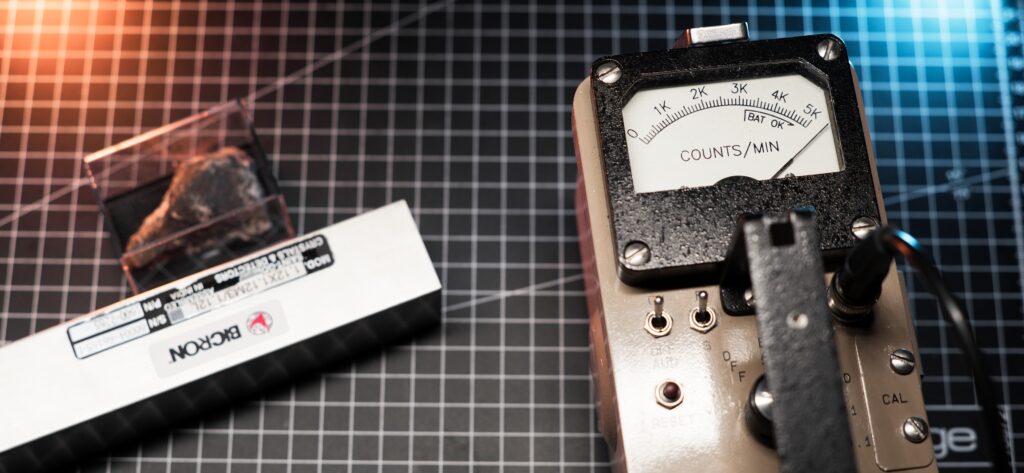
So what do these sources measure today? For measuring the activity I will use my SE International Ranger as it uses a very sensitive LND7317 Geiger tube which is a standard for profesional devices. For measuring the gamma dose rate, I will use my RAYSID as it calculates accurate dose rate based on the gamma energy detected. Since the sources have pretty low activity, I will take measurements at contact and not 1 cm distance as I usually do. I will also take them inside my lead castle to minimise any measurement error caused by fluctuations in background radiation.
Source #1
First up is the Co-60 source I got from a friend of mine. The top layer with all the marking, unfortunately has been sanded down so I have no way to determine from which year the source is. The activity while low, is detectable and I was able to measure 244 CPM over background with my Ranger. When measured with my RAYSID I got increase of 31 CPS and 0.50 uSv/h.
Source #2
Next source is the a slightly pink one that came with the RK-67 meter. Unfortunately the activity is quite a bit lower than the first source. I measured an increase of 89 CPM over background on the SE International Ranger, while my RAYSID measured 8.3 CPS and 0.14 uSv/h.
Source #3
The last source is unfortunately also the least active one and I was able to only measure 20 CPM on my Ranger and 1.4 CPS and 0.02uSv/h on the RAYSID. This source is practically down to its last few atoms decaying and it really doesn’t have much life left in it…
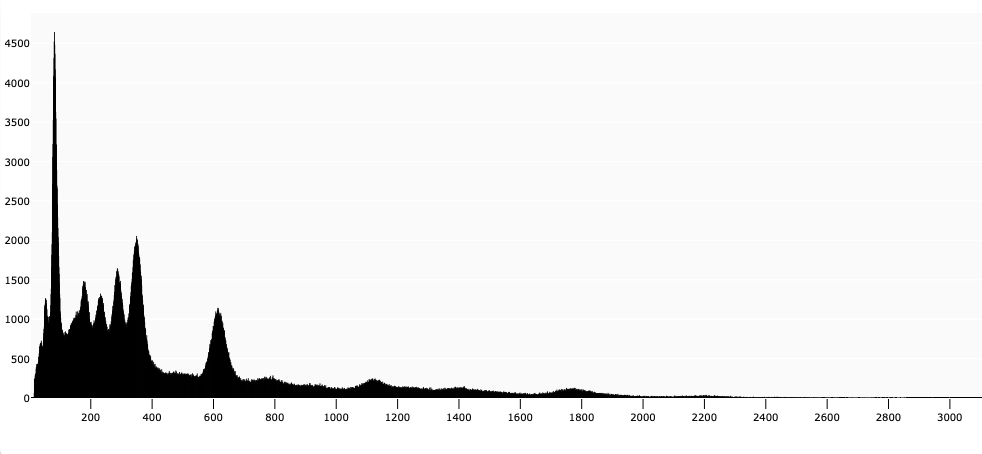
While none of these sources measured particularly high, they are suitable for gamma spectroscopy assuming you have big enough crystal and high quality lead castle. These sources will be still detectable for few years but eventually they will lose all their activity which gives me probably some time to save up and get a fresh 1uCi source from Spectrum Techniques which should last me for the foreseeable future.

Summary
Exploring the radioactivity and uses of Co-60 was really fascinating and I have certainly learned a lot about it. I want to hear from you, do you have any Co-60 samples in your collection and how active are they? I’m looking forward to your answers int he comments below!
If you enjoyed this article, feel free to support my work over on Patreon: patreon.com/allRadioactive
Feel free to also check out my YouTube Channel: https://www.youtube.com/@allRadioactive