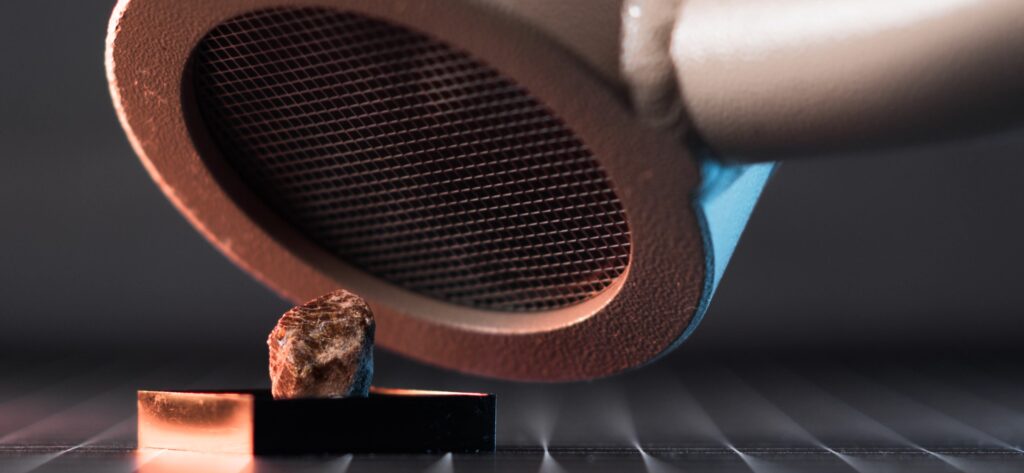
Radiobarite – Why is this mineral so unique!

Welcome back, my fellow radiation nerds! Today, we’re diving into the radioactivity and the geology of a very unique mineral called Radio-Barite.

Radio-Barite is a variation of the Barite mineral, and, as the name suggests, it’s radioactive as it contains a small amounts of Radium-226. Since Radium is chemically very similar to Barium it can be easily incorporated into the Barite mineral structure during its formation, if it’s present in the surrounding environment, usually in trace amounts in groundwater or the surrounding uranium minerals. Its chemical formula is (Ba,Ra)SO₄, and its crystals usually have brownish colour and form an orthorhombic structure and score 3–3.5 on the Mohs scale of mineral hardness.
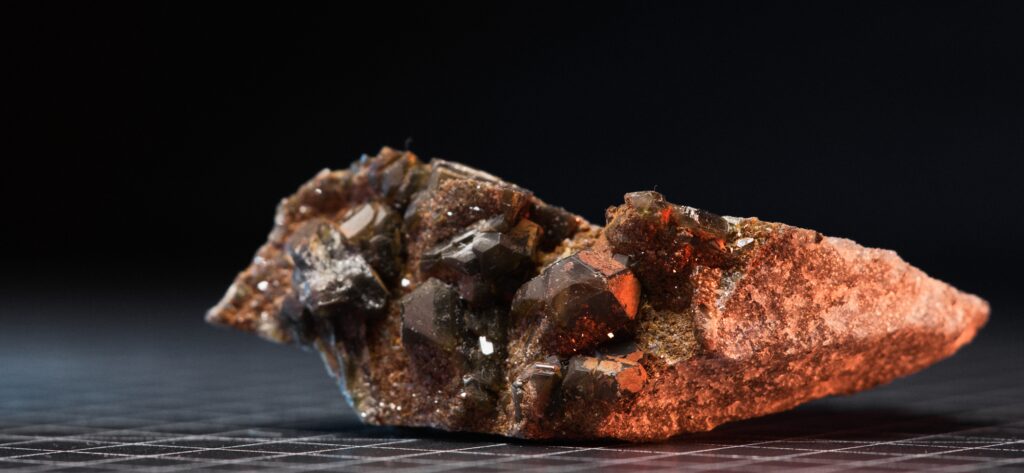
What makes Radio-Barite particularly unique is that it contains radium without its parent isotopes such as Uranium, Thorium or Protactinium, however impurities can sometimes result in the presence of those elements in the mineral. Radium-226 has a half-life of 1,600 years, meaning that for pure Radio-Barite to exhibit detectable radioactivity, it must have formed within the past few thousand years.

Non-radioactive Barite is the primary source of element Barium, which is mainly used in natural gas and oil drilling to prevent blowouts. It’s also added in small amounts to many everyday items. If Radio-Barite is mined instead of non-radioactive Barite, contamination can occur since radium is very difficult to separate from Barium due to their chemical similarities. However, this is rare, as the ore is strictly measured to ensure it doesn’t exceed NORM (Naturally Occurring Radioactive Material) limits.
Gamma Spectrum and activity of my sample

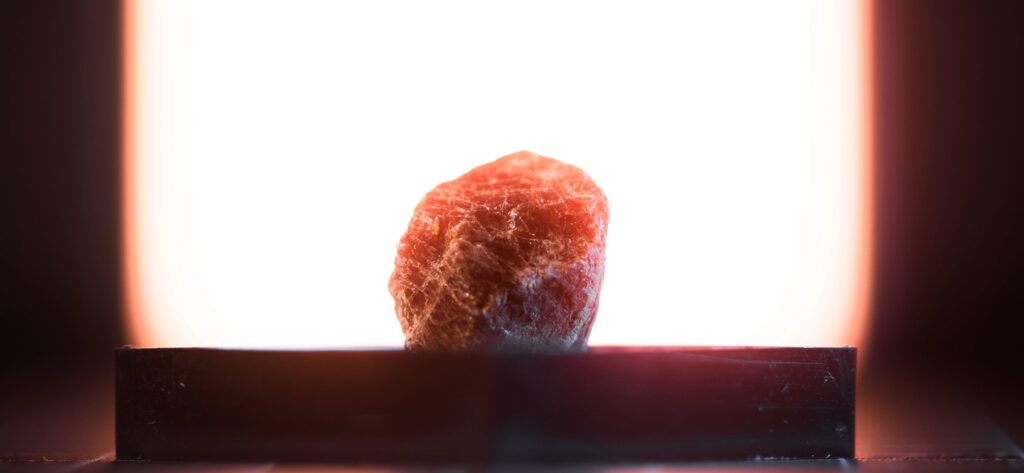
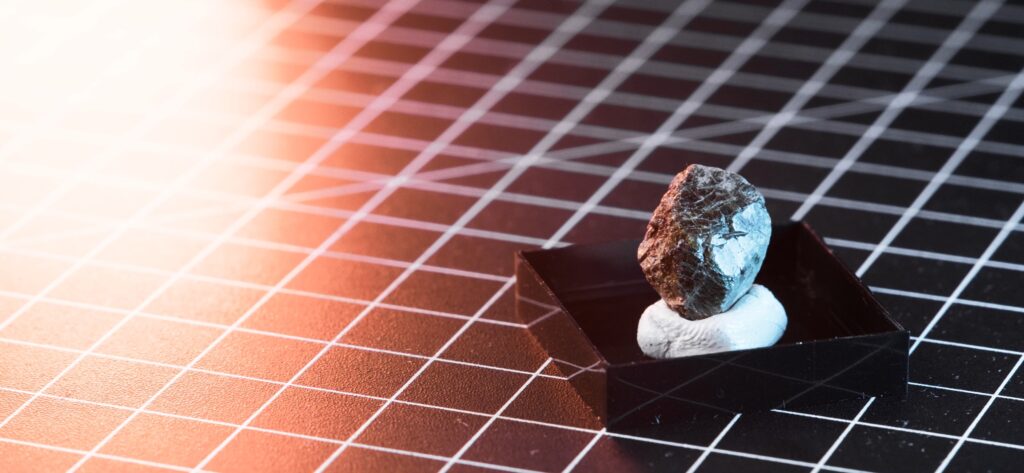
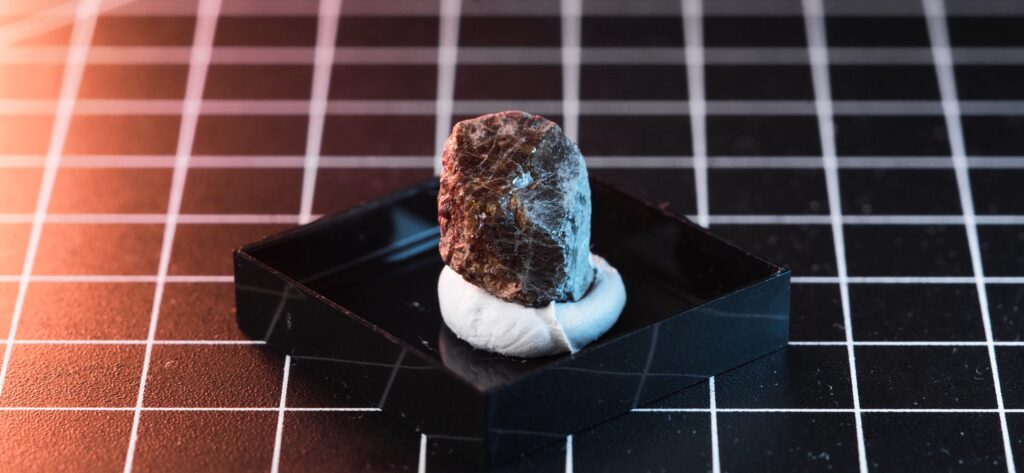
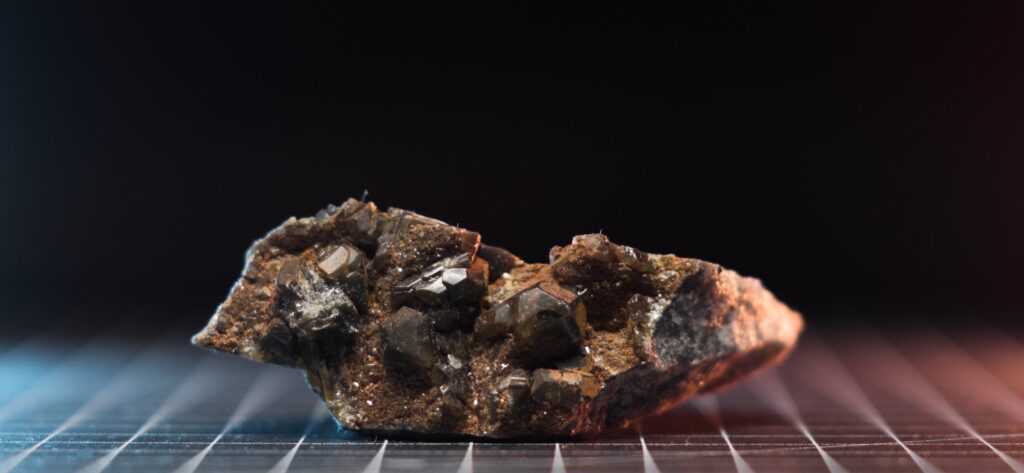
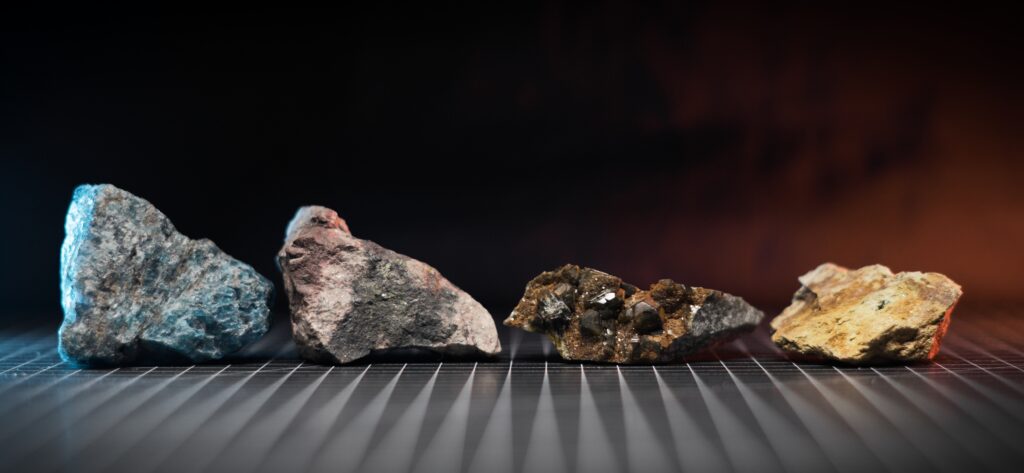
My sample of Radio-Barite comes from Jeníkov in the Czech Republic, a region known for its high-grade uranium deposits. The sample has beautiful, large, brown crystals, which do not fluoresce under black light and are formed on top of quartzite quarry matrix.

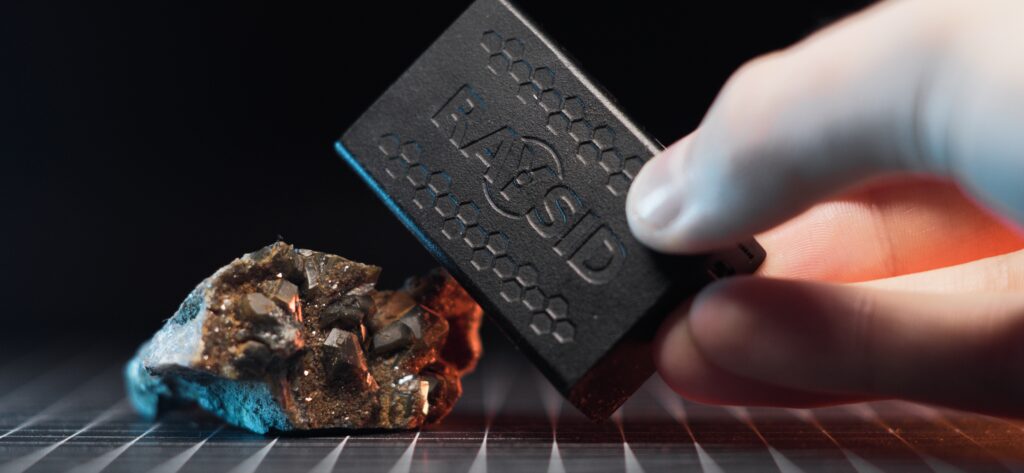
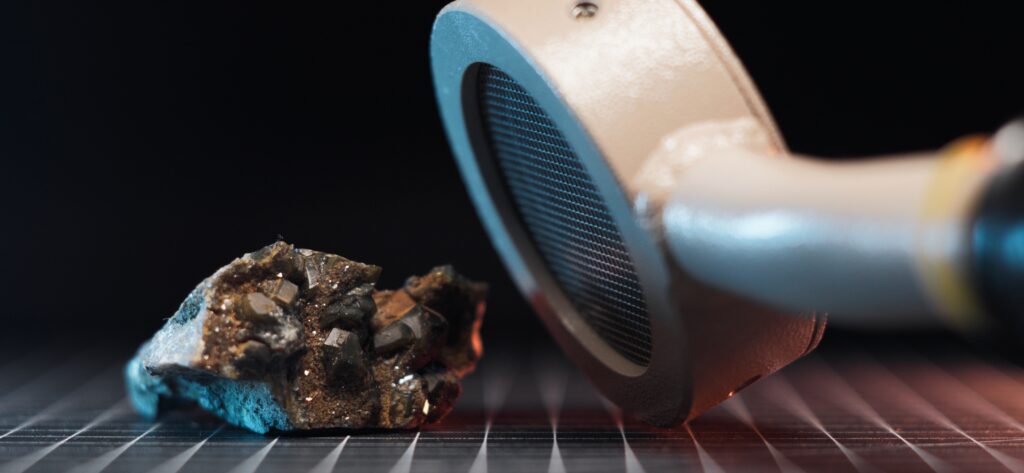
Even though Radio-Barite contains only trace amounts of radium, its radioactivity is detectable with most Geiger counters. My sample measures around 400 CPM on my Ludlum Model 3 with a 44-9 probe. The emitted gamma dose rate is rather low at approximately 0.12 µSv/h over background when measured with my RAYSID also at 1 cm distance.
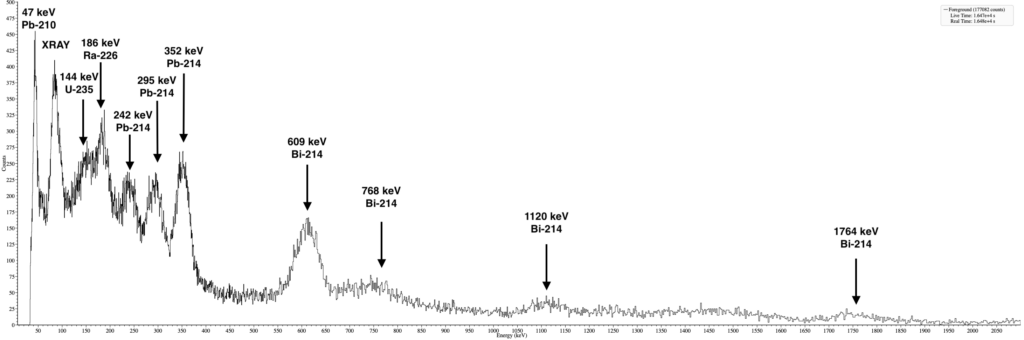
A quick gamma spectroscopy of my Radiobarite mineral revealed an interesting spectrum. I expected to see a clean Ra-226 spectrum but the peak at 144keV indicates the presence of Uranium. This is most likely due to impurities that were picked up by the mineral during its formation in a Uranium rich environment.
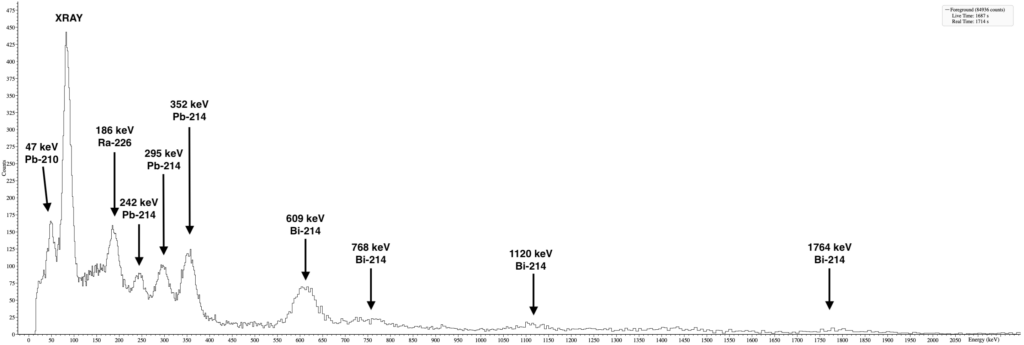
For comparison, here is a spectrum of pure Ra-226 from an old radium painted watch. While similar, the U235 peak at 144keV is missing which is distinctive feature between natural uranium and radium spectra.
A few final words

Exploring the geology and the radioactivity of my RadioBarite mineral sample was a lot of fun and I certainly learned a lot about it! I want to hear from you, did you know about the radioactive radio-barite before and do you have any samples of it? What other radioactive minerals should I cover in the future videos? Let me know in the comments below!

Thank you so much for reading this post, I hope you enjoyed it and learned something new! If yes, please make sure to subscribe to the email list so that you get notified when new posts are added. Also feel free to check out my Ko-Fi page where you can donate a nice cup of radioactive coffee and support my work financially.

and remember, stay active!

Monazite – The Most Common Thorium Mineral!

Welcome my fellow radiation nerds! Today we explore the radioactivity and the geology of the most common Thorium mineral – Monazite!

Monazite is a brownish phosphate mineral, primarily known for containing several of the rare earth elements, including Lanthanum, Cerium, and Thorium. It scores between 5.0 and 5.5 on the Mohs scale of mineral hardness and has a density of 4.6–5.7 g/cm³.

Compared to other Thorium minerals, such as Thorianite (70–80% ThO2) or Thorite (5–20% ThO2), Monazite contains much less Thorium, at around 6-7%. However, its widespread availability makes it the most common Thorium ore, accounting for approximately 12-15% of the world’s total Thorium reserves.

Monazite is most often located in placer deposits of sand and gravel. It’s primarily found in countries like India, Brazil, South Africa, Australia and China but it can be also found in many other places around the globe.

Fun fact: China is a major producer of Monazite due to its demand for rare earth elements, which also results in a significant surplus of Thorium. This surplus is playing a key role in driving the development of Thorium reactors as a potential alternative to uranium-based ones. It is also partially why there are so many radioactive “Scalar Energy Negative Ion” devices from China, as they contain trace amounts of Thorium from the Monazite extraction process.

Variations of Monazite

Monazite is not a single mineral, but rather a group of minerals with very similar structures and properties but with slightly different dominant elements. There are several variations of Monazite, with five main types. Three of these variations contain radioactive Thorium while another three contain Lanthanum (La) which does have a naturally radioactive isotope of La-138, but its radioactivity is extremely low and generally difficult to detect, especially in the presence of Th-232.

  • monazite-(Ce), (Ce,La,Nd,Th)PO4 (the most common)
  • monazite-(La), (La,Ce,Nd)PO4
  • monazite-(Nd), (Nd,La,Ce)PO4
  • monazite-(Sm), (Sm,Gd,Ce,Th)PO4
  • monazite-(Pr), (Pr,Ce,Nd,Th)PO4

Mining History

Since Monazite is rich in the rare earth elements, it has been their primary source for many years.

In the 1880sCarl Auer von Welsbach was looking for a supplier of Thorium to produce his newly invented thoriated gas mantles. One day he noticed that Brazilian ships used Monazite sand as ballast, and soon, Brazil became a key supplier of Thorium for the production of the gas mantles

For many years, Brazilian and Indian Monazite dominated the industry. However, after World War II, much of the mining activity shifted to South Africa.

Unfortunately, due to the radioactive waste produced during Monazite processing, it was eventually phased out in favor of Bastnäsite in the 1960s, which contains much less Thorium making it safer to work with.

In the recent years, the growing interest in Thorium reactors as a potential alternative to Uranium reactors has sparked renewed interest in Thorium. This shift could lead to an increased demand for Thorium and possibly bring Monazite back into commercial use.

My Sample

I acquired my sample at a recent mineral trade show. It’s the most common variation, Monazite-(Ce), and it comes from the Marijao Pegmatite region in Madagascar. Despite its small size, its radioactivity is easily detectable, reading around 2000 CPM on my Ludlum Model 3 with a 44-9 probe at a 1 cm distance.

Although I already know from its chemical formula that Thorium is present, I decided to do a Gamma Spectrum of the sample with my RAYSID gamma spectrometer. As expected, it revealed peaks characteristic of the Thorium-232 and its decay chain.

Conclusion

I’d love to hear about your experiences with Monazite or other Thorium-containing minerals. Do you have any in your collection? Let me know in the comments below!


Thank you so much for reading this post, I hope you enjoyed it and learned something new! If yes, please make sure to subscribe to the email list so that you get notified when new posts are added. Also feel free to check out my Ko-Fi page where you can donate a nice cup of radioactive coffee and support my work financially.

and remember, stay active!