Exploring the Fascinating Radioactivity of Lutetium-176 (and Lutetium-177)

Exploring Naturally Radioactive Elements – Lutetium 176

Welcome back my fellow radiation nerds!

When we think of naturally occurring radioactive elements we mainly think of Uranium and Thorium and maybe sometimes Potassium. While those elements are the most common ones, there are many others that also have naturally radioactive isotopes. However, most of them have very long half-lives making them extremely hard to detect, especially without specialised equipment, but there are a few that can be measured with a sensitive Geiger Counter or Scintillation detector. One of them is Lutetium with its radioactive isotope of Lutetium 176.

If you enjoy this content make sure to subscribe to the channel so you don’t miss any of the upcoming uploads. Thanks and now back to the video!

The Discovery

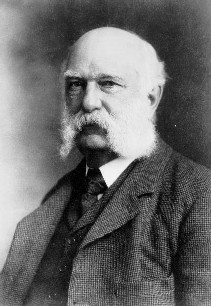
Lutetium has been discovered independently by three scientists in the year 1907, a French scientist George Urbain, Austrian mineralogist Carl Auer von Welsbach, which you might also know as the inventor of Thoriated gas mantles, and American chemist Charles James. After years of dispute, George Urbain has been named by the scientific community as the discoverer of the new element and he named it Lutetium after Lutetia, the ancient Roman name for the city of Paris.

George Urbain
Carl Auer von Welsbach
Charles James

Properties of Lutetium

Lutetium is a rare earth element with an atomic number of 71. It is the last element in the Lanthanide series and it shares many of the chemical properties with other elements in the group. In nature, it has only 2 isotopes, a stable Lutetium 175 (97.4%) and a radioactive Lutetium 176 (2.60%).

Lutetium 176 undergoes a beta decay with an average energy of 182 keV, turning into Hafnium 176 with a half-life of 37.8 Billion (3.78e10) years, and in the process it also emits gamma rays at 88, 202 and 307 keV. What is Interesting about Lutetium 176 is that the both gamma rays of 202 and 307 keV are emitted in coincidence with each other, forming summing peak at 509keV

RAYSID Gamma Spectrometer (<7% at 662keV resolution)

Uses of Lutetium

Today Lutetium doesn’t see much use due to its difficult production and very high costs but it can be found in some specialised fields. One of its main uses is in the production of scintillation crystals which are used in positron emission tomography (PET) scans.

It can also be found in some alloys like in the case of like LuAG where it improves the overall durability and heat resistance of the material.

And thanks to its long half-life, Lutetium 176 can be used for Lutetium-hafnium dating of meteorites.

My samples & their radioactivity

At the moment, I have two types of Lutetium samples. The first one is a form of LYSO scintillation crystals which I got from a friend of mine (thanks James!), I have linked his eBay store in the description below in case you want to grab one for yourself.

James Ebay Store

When measured with SE International Ranger which uses a LND7317 Pancake type tube, I got from a single crystal 73 CPM, only 30 CPM over the background radiation. When measured with my RAYSID I got an increase of 15 CPS in the activity which is more than enough to build a gamma spectrum, however a good lead castle to minimise background radiation is definitely a good idea.

As mentioned before, these crystals are used in positron emission tomography (PET) and when exposed to radiation they glow in a light blue colour.

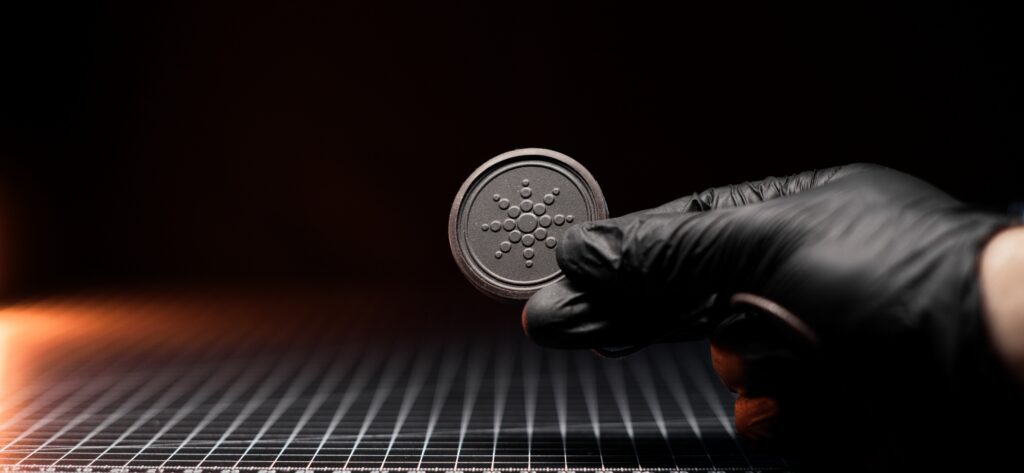
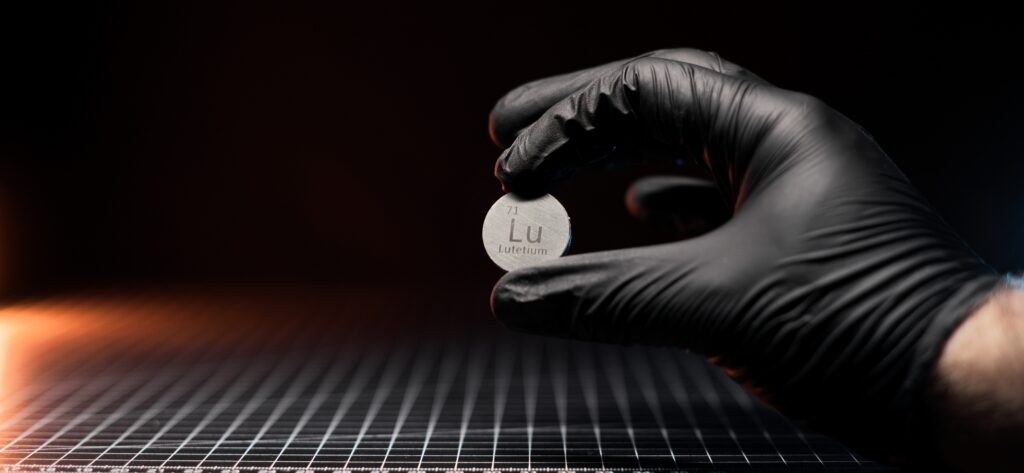
My second sample is a metal coin made out of pure Lutetium metal which measures 24.26 mm x 1.75 mm and weighs about 8.43g, this means it contains around 0.218g of pure Lu176 that has activity of approximately ~432 Bq. Compared to the LYSO crystal, the activity is a bit higher and reads on my Ranger 160 CPM above background and 55 CPS on my RAYSID.

Since the coin is made of pure metal, it is much denser than the LYSO crystal and some of the activity gets self shielded which results in the readings being a big lower than expected.

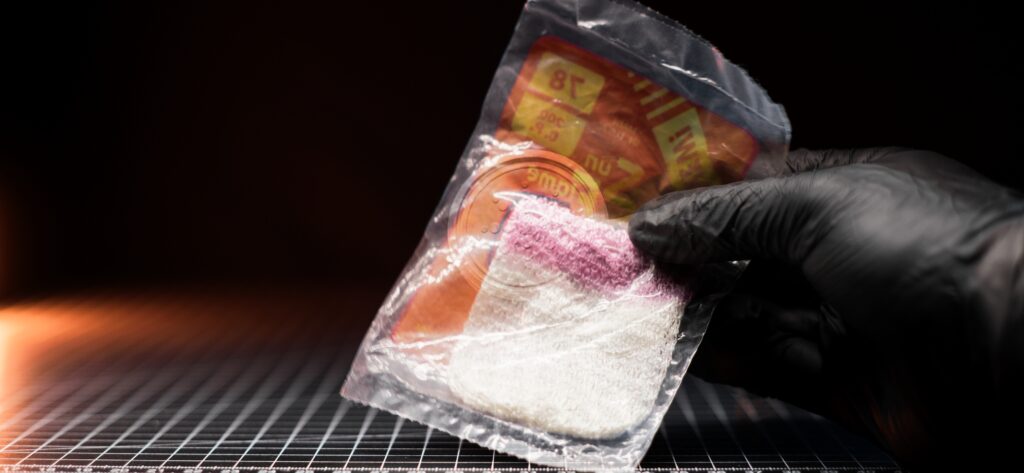
Since I use it as my main Lu-176 source for gamma spectroscopy, I decided to put it in a 1″ plastic disk with a label stylised a bit after other professional calibration sources. While it might be a bit goofy or silly to some, I do enjoy a consistent look of my sources and I’m very happy with the results.
Isotope Lutetium 177

In nuclear medicine, a synthetic isotope of Lutetium, Lu-177 is used in targeted cancer therapy. It is produced by neutron irradiation of Lu176 and it decays through a beta emission into Hafnium 177 with a half-life of 6.65 days and it emits two gamma rays at 113 keV and 208 keV.

A good friend of mine works in a nuclear lab and recently they received a fresh batch of Lu177 for their experiments and he was kind enough to make some videos showcasing the samples, testing them against some of his meters and take a gamma spectrum of them. Big Thanks for the help!

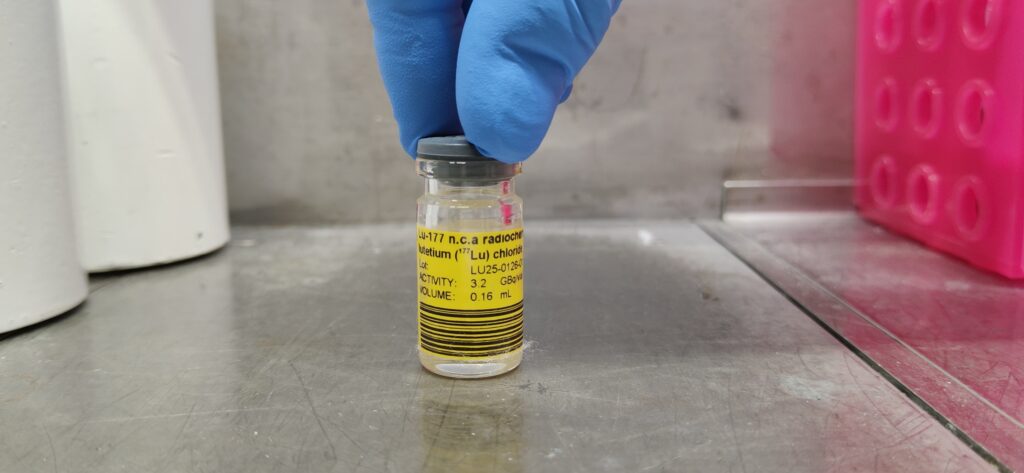
Originally this vial contained 3.2GBq of Lu-177 in form of Lutetium Chloride solution, however most of it has been already removed and now there are only traces of Lu-177 left. Despite that, the vial still read pretty high on the RadEye B20 with over 60k CPM and registered 760uSv/h on the RAYSID.
Summary

Exploring the radioactivity and the history of Lutetium and its isotopes was definitely a great experience and I have learned a lot about it. I want to hear from you, did you know about the natural radioactivity of Lutetium and do you have any samples of it? What other radioactive elements should I cover next? Let me know in the comments below!


Thank you so much for reading this post, I hope you enjoyed it and learned something new! If yes, please make sure to subscribe to the email list so that you get notified when new posts are added. Also feel free to check out my Patron page where you can support the channel financially and get some additional exclusive content.

and remember, stay active!
FS5000 – Is This The Ultimate Budget Geiger Counter?

FS5000 – Is This The Ultimate Cheap Geiger Counter?

Welcome back my fellow radiation nerds! Today we are taking a closer look at the FS5000 meter and whether it is the ultimate budget Geiger counter!

If you enjoy this content make sure to subscribe so you dont miss any of the upcoming uploads. Thanks and now back to the video!

For a very long time I had a serious problem with answering one of the most common question in the field of amateur nuclear physics: “Which cheap geiger counter, would I recommend?”.

On one hand, there are plenty of cheap Chinese meters but in most cases they are honestly of very low quality. They suffer from low measuring range, slow averaging time and bad GM tubes that are not sensitive and can be prone to UV pollution.

On the other hand, there are professional devices such the SE International Radiation Alert Ranger which are absolutely fantastic, but they cost almost 10x what the cheap Chinese meters do and they are hard to recommend to someone who is just starting out, even if these meters are definitely worth their price.

So the question is: is there a budget friendly meter that can be bough brand new and that performs decently? Well, the Bosean FS5000 might be just the right answer!

FS5000 – Overview

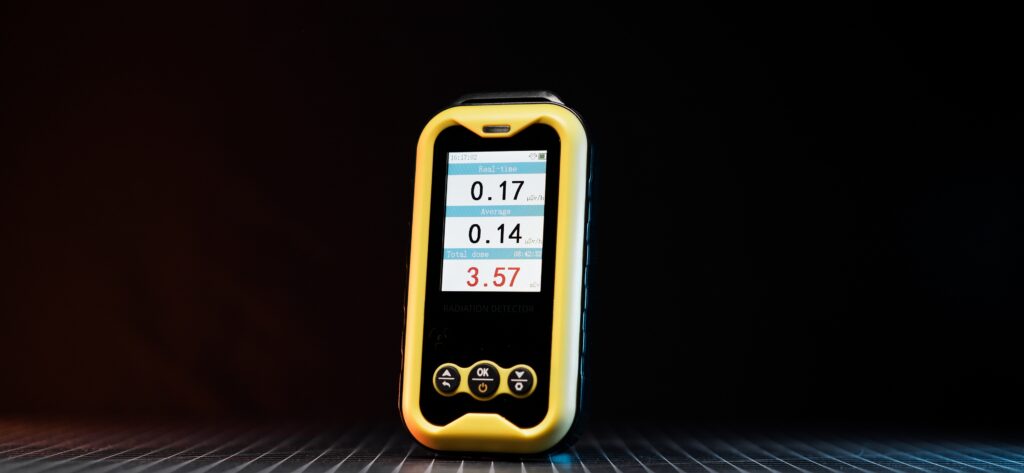
The FS5000 is very budget friendly geiger counter produced by Bosean. While they are available on Amazon for around 70-80 Euro, I would recommend picking one up from the official Bosean AliExpress store site as they are a bit cheaper there, usually costing around 50 Euro and the only big downside is that delivery will take a few day longer.

Link to the Bosean AliExpress store: CLICK HERE

The meter has a very simple design which I really like and unlike some other cheap meters, the FS5000 doesn’t look cheesy or anything like that – it feels like a proper measuring device. The body is made out plastic which is pretty decent but I would still avoid dropping it and handle it with care as it doesn’t come with any type of carry case.

The user interface is pretty intuitive and the menus are simple to navigate. The measurements are displayed on a large screen which is decently bright to be used even in bright daylight. There is also a speaker with audible clicking sound which a great bonus but it isn’t very loud and can be hard to hear in some noisy environments and the LED on the top of the meter only flashes when the alarm gets triggered.

The device runs an internal rechargeable battery which should last for about 5 days according to the manufacturer. While battery life is pretty good, I’d prefer if the unit used standard AA batteries which can be easily and quickly swapped out in the field if needed.

The tube used by this meter is the J321 which is a glass tube and it is ok. It gives around 20 CPM of background and it is able to detect hard beta, gamma and Xray radiation. Compared to other Chinese tubes, it is definitely much better but I wouldn’t call it an ideal design. I’m still waiting for Chinese manufactures to create a tube that can truly rival and beat the good old SBM-20, especially as its supply really dried out in the recent years.

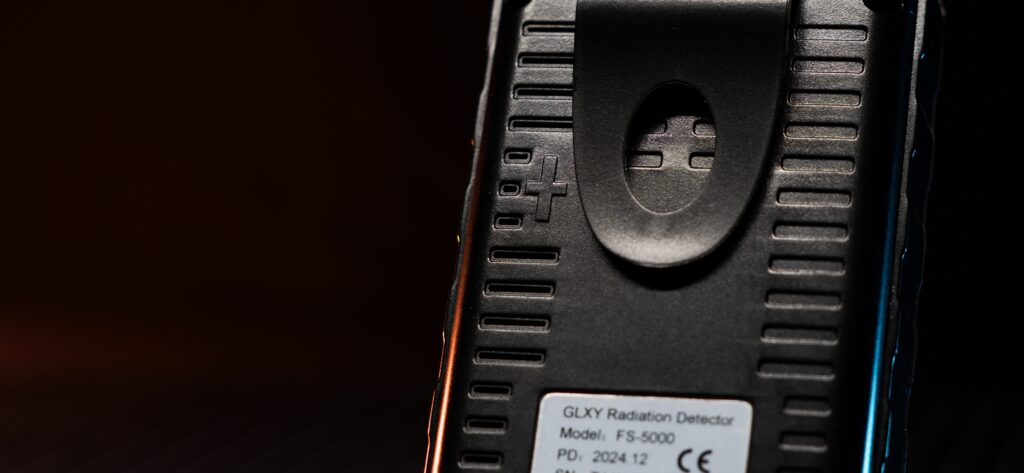
On the bak of the unit there are small opening in the body which allow beta particles to reach the GM tube however there is no beta shield, which is a big bummer as it makes all the dose reading in uSv/h, pretty much pointless as beta activity will highly inflate them. I would really like to see a removable beta shield like on the Terra-P meters added to the future models. Luckily there is a CPM and even CPS mode but with low sensitivity of the J321 tube, I think the CPS is really unnecessary and I would just stick to using the CPM.

When considering the FS5000, make sure that the listing explicitly states that the meter comes with J321 and not some other generic GM tube. While reading through some forums, I noticed that some of these meters came with alternative tubes which have much worse performance and should be avoided.

So how does the FS5000 perform?

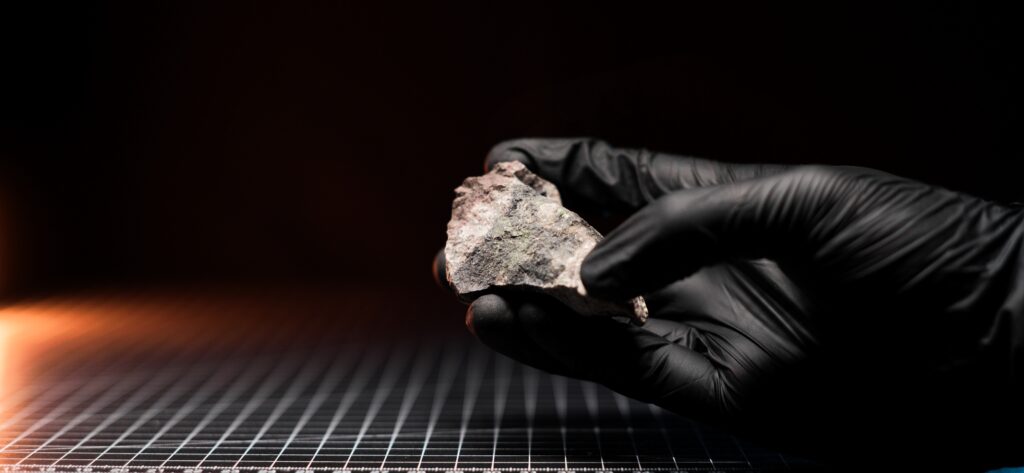
I tested my FS5000 meter against a few of my sources which include a negative ion pendant, a thorium gas mantle, a coin made out of pure lutetium metal and a high grade Uranium ore.

As mentioned previously, the FS5000 doesn’t have a beta shield which makes the dose rate reading irrelevant so I will be using the CPM as they display the raw data from the detector. Remember that CPM are dependent on the tube used by the meter and the results measured with a J321 will be vastly different from ones measured with the LND7311 found in my Ludlum 44-9 probe which I normally use.

First up is a Negative Ion pendant which contains Thorium 232. The FS5000 measured pretty low activity and it took the meter a while to show the final result which was 50CPM, only 30 CPM over background. Not an ideal result.

The Thorium gas mantles are pretty common and easy to find check source. This time the FS5000 had no problem with detecting them and I got around 450 CPM. Definitely a better result than with the pendant.

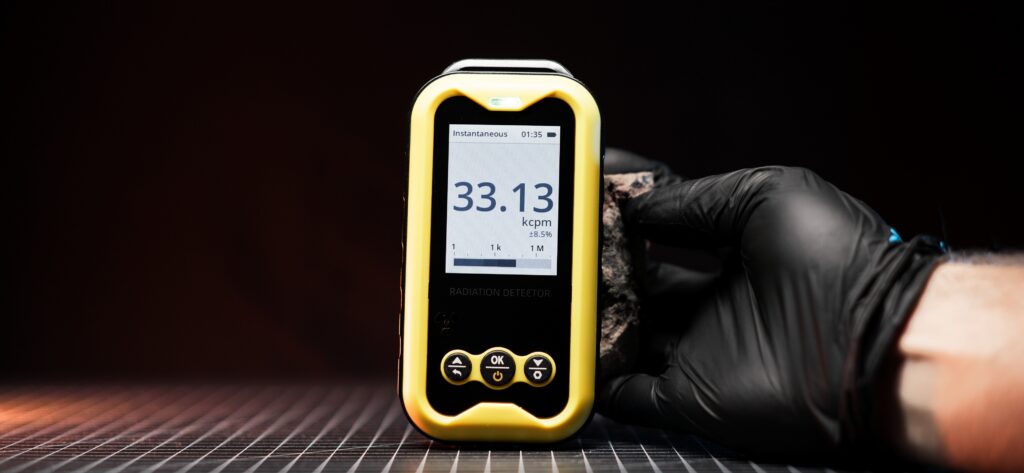
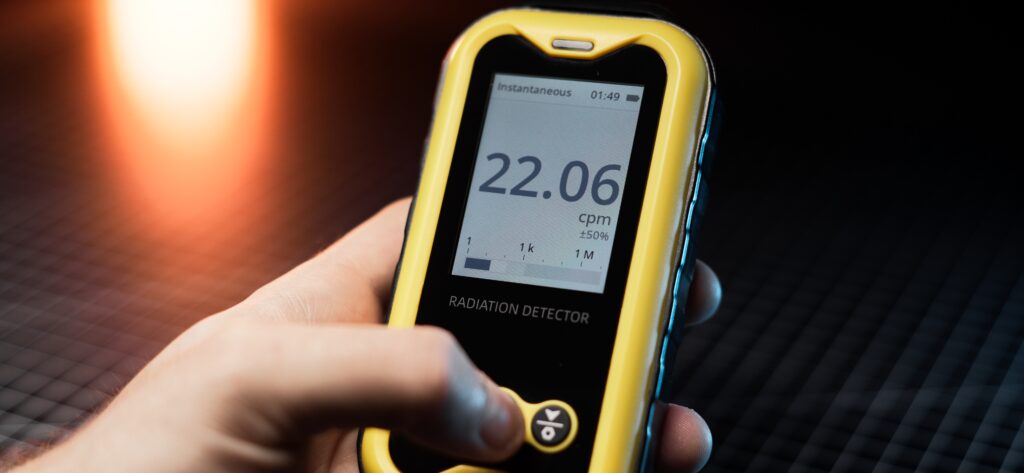
Most budget meters struggle with detecting very low activity samples. This Lutetium coin contains 0.218g of radioactive Lu176 isotope which has an activity of ~440 Bq. It is a very low activity sample but detectable with my more sensitive meters. The FS5000 however struggled with detecting it. The readings eventually did go up by a few counts but it took a while and I don’t think I’d be able to detect in the field. Unfortunately the FS5000 failed this test.

Lastly, I tested the meter against a piece of a high grade Uranium ore and it had absolutely no problem in detecting it but it took over a minute before the final result stabilised at over 36k CPM.

After conducting the stress test, I notice another big problem with the FS5000 meter. It takes a while for the readings to comedown back to background radiation levels after measuring hot samples.

Rad Pro Upgrade

As we discovered, the main issue in most of these cheap Geiger counters is a bad firmware. It usually has slow averaging time which doesn’t adjust to sudden changes in activity resulting in very slow calculation of the measurements. When compared to my RAYSID or my MKC-01CA1M, the FS5000 doesn’t even come close. This is a serious issue which always made me recommend against buying cheap meters.

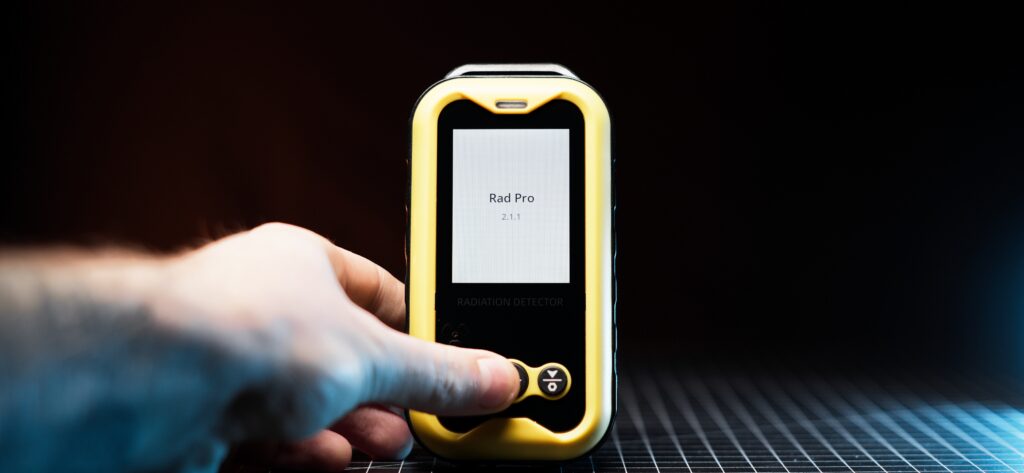
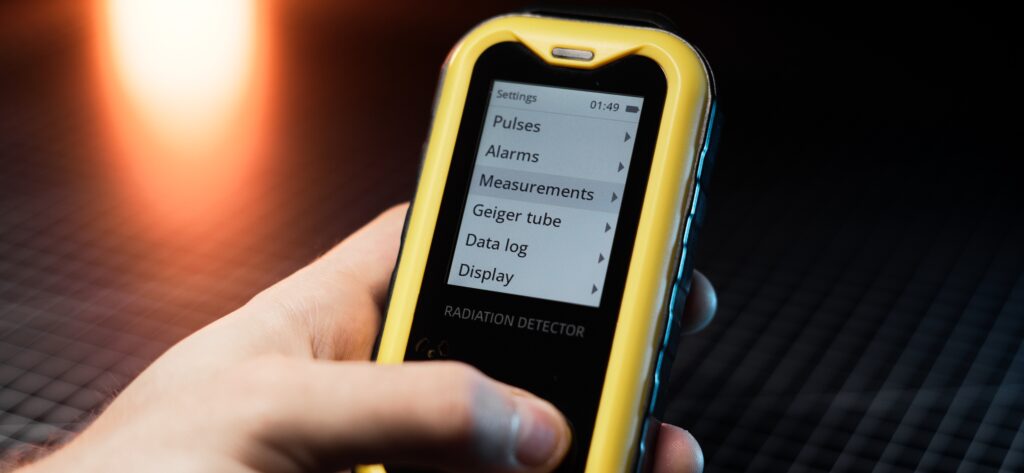
However, the community is great and a guy called Gissio wrote a custom firmware called RadPro which addresses most of the firmware issues. After installing it, the FS5000 became much more responsive to sudden changes in activity and the new firmware also brought a bunch of new features, which really elevate the usability of the meter.

The only real downsize of this new firmware is that the device eats through the battery much quicker but I think it is a worthy sacrifice. Hopefully this can be optimised in a future update.

I definitely recommend checking it out if you have one of the following meters:

FS2011, YT-203B, Bosean FS-600, Bosean FS-1000, Bosean FS-5000, FNIRSI GC-01 and JOY-IT JT-RAD01

Link to Rad Pro: https://github.com/Gissio/radpro

Summary

The Bosean FS5000 has positively surprised me with its value for money, especially after installing the custom RadPro firmware. It definitely won’t be replacing my other meters such as the Terra-P or the MKC-01CA1M but I wouldn’t hesitate to recommend it to someone who is just starting out and looking to buy their first cheap meter to begin their journey with radiation detection.

I want ot hear from you! Do you have the FS5000 meter? What are your experiences with it and do you use the custom Rad Pro firmware with it? Let me know, in the comments below!


Thank you so much for reading this post, I hope you enjoyed it and learned something new! If yes, please make sure to subscribe to the email list so that you get notified when new posts are added. Also feel free to check out my Ko-Fi page where you can donate a nice cup of radioactive coffee and support my work financially.

and remember, stay active!