Adrianov’s Compass – Another Radioactive Artefact of the Cold War

Adrianov’s Compass – Another Radioactive Artefact of the Cold War

Welcome back my fellow radiation nerds. Today we will take a look at another soviet, radioactive artefact from the Cold War, the Adrianov’s Compass!

The history of the compass

The Adrianov’s compass was designed by Vladimir Adrianov in 1907 for the Russian Imperial Army and since then, it served in various countries within the Warsaw Pact until it was eventually phased out in the late 1950s. Although originally intended for military use, the compass became widely adopted by scout groups and other paramilitary organisations.

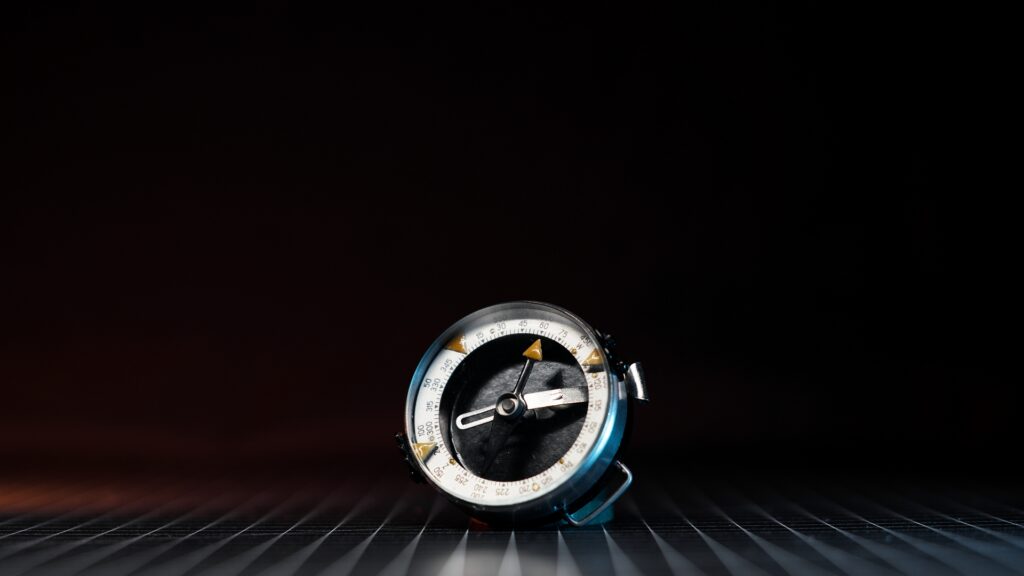
These compasses used radium paint on the tips of the arrows and few other spots to make them glow in the dark, which also resulted in them being radioactive. Due to their old age, there is no visible glow left and under black light there is a little bit of green fluorescence but the radioactivity is easily detectable..

It is worth mentioning that only the models with metal bodies and orange paint on the arrows used radium. The ones with plastic, white bodies or without orange paint aren’t radioactive.

The built quality of the compass is very solid and there are no loose parts, which definitely helps with containing any bits of radium paints that might have fallen off. This being said, there is a little bit of radon gas leaking out.

On the back there is a logo of the factory in which the compass was manufactured and the year of production. Mine was made in 1956 by SZMO (Śląskie Zakłady Mechaniczno-Optyczne w Katowicach) in Katowice, Poland. Although it is 69 years old, it is still in a great visual condition.

Today these compasses can be easily found pretty cheaply at flea markets, especially in countries that were part of the Warsaw Pact.
Activity and gamma spectroscopy of the compass

When measured with My Ludlum Model 3 with a 44-9 probe, I got a reading of 10k CPM at 1cm distance. The thick glass blocks pretty much all alpha and beta radiation and if removed, the activity from the radium paint will easily max out my meter at over 500k CPM but I strongly advise against opening any items containing radium paint.

The gamma dose from the compass is approximately 5.50 uSv/h when measured with my RAYSID at 1cm distance.

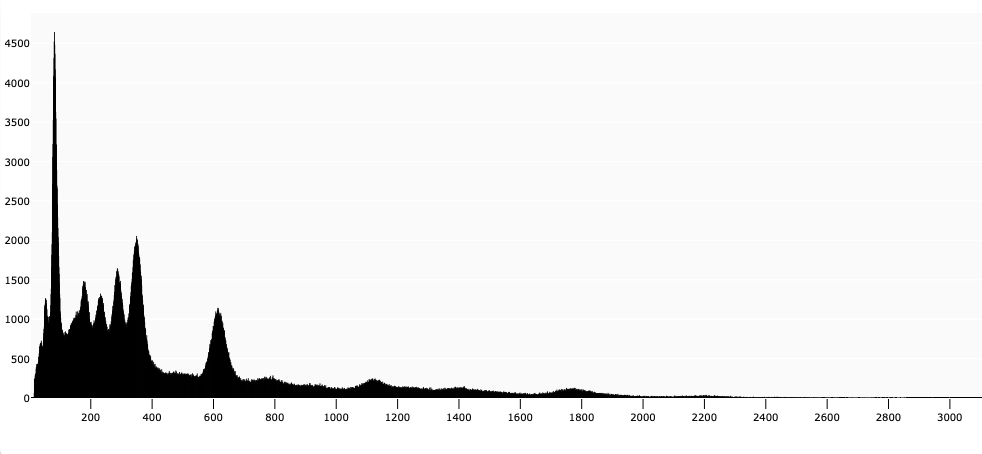
A quick gamma spectroscopy showed clear peaks for Ra-226 and its decay chain.
A few last words

Through out the history, various militaries used countless radioactive items from radium painted watches, airplane gauges to even helmet markers and while those items are definitely great collectables for anyone fascinated with military equipment of the 20th century, it is important to remember to always handle such items with most care, as Radium is a particularly nasty element, and the paint can easily fall apart and contaminate anything it touches. Remember that safety always comes first.

I want to hear from you! Do you have any radioactive watches or compasses? What other radioactive items should I explore? Let me know in the comments below!


Thank you so much for reading this post, I hope you enjoyed it and learned something new! If yes, please make sure to subscribe to the email list so that you get notified when new posts are added. Also feel free to check out my Ko-Fi page where you can donate a nice cup of radioactive coffee and support my work financially.

and remember, stay active!

Radiobarite – Why is this mineral so unique!

Welcome back, my fellow radiation nerds! Today, we’re diving into the radioactivity and the geology of a very unique mineral called Radio-Barite.

Radio-Barite is a variation of the Barite mineral, and, as the name suggests, it’s radioactive as it contains a small amounts of Radium-226. Since Radium is chemically very similar to Barium it can be easily incorporated into the Barite mineral structure during its formation, if it’s present in the surrounding environment, usually in trace amounts in groundwater or the surrounding uranium minerals. Its chemical formula is (Ba,Ra)SO₄, and its crystals usually have brownish colour and form an orthorhombic structure and score 3–3.5 on the Mohs scale of mineral hardness.

What makes Radio-Barite particularly unique is that it contains radium without its parent isotopes such as Uranium, Thorium or Protactinium, however impurities can sometimes result in the presence of those elements in the mineral. Radium-226 has a half-life of 1,600 years, meaning that for pure Radio-Barite to exhibit detectable radioactivity, it must have formed within the past few thousand years.

Non-radioactive Barite is the primary source of element Barium, which is mainly used in natural gas and oil drilling to prevent blowouts. It’s also added in small amounts to many everyday items. If Radio-Barite is mined instead of non-radioactive Barite, contamination can occur since radium is very difficult to separate from Barium due to their chemical similarities. However, this is rare, as the ore is strictly measured to ensure it doesn’t exceed NORM (Naturally Occurring Radioactive Material) limits.

Gamma Spectrum and activity of my sample

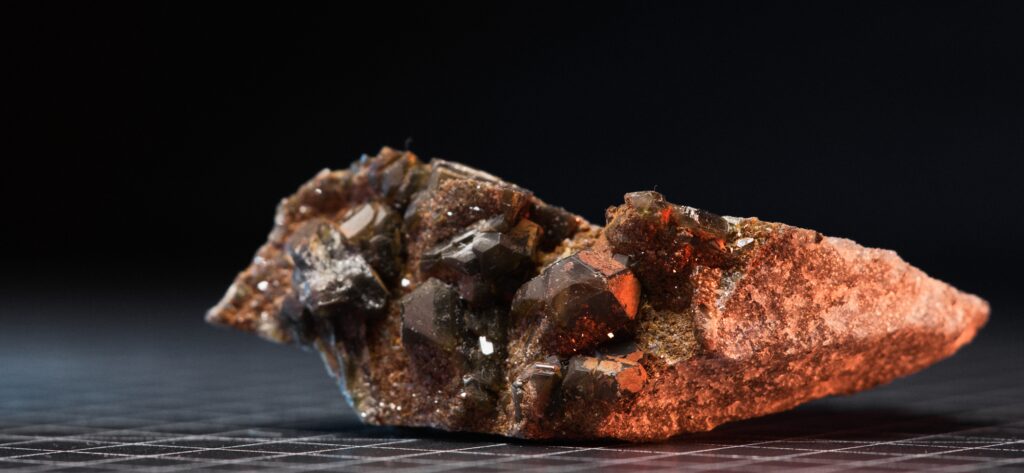
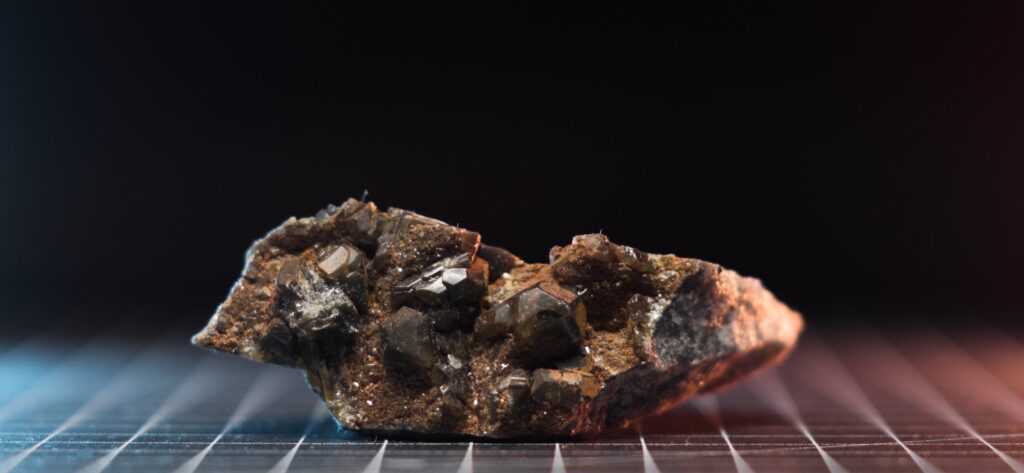
My sample of Radio-Barite comes from Jeníkov in the Czech Republic, a region known for its high-grade uranium deposits. The sample has beautiful, large, brown crystals, which do not fluoresce under black light and are formed on top of quartzite quarry matrix.

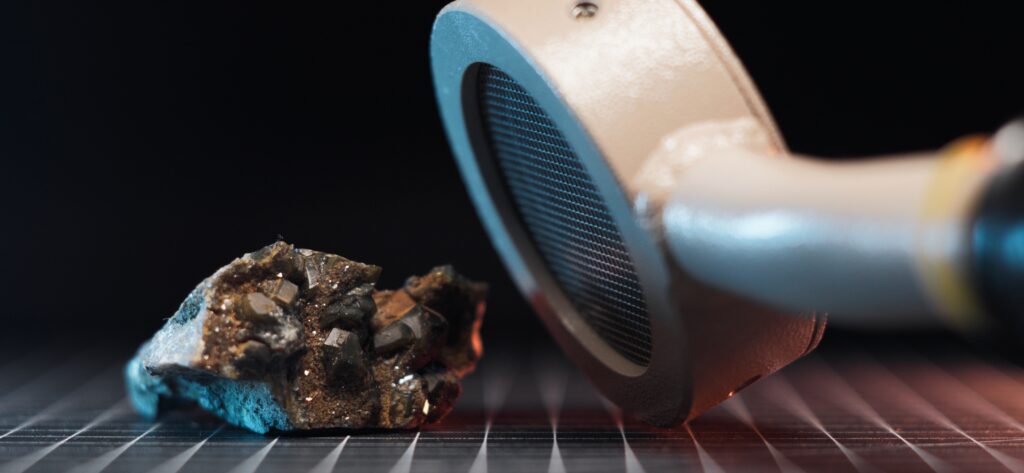
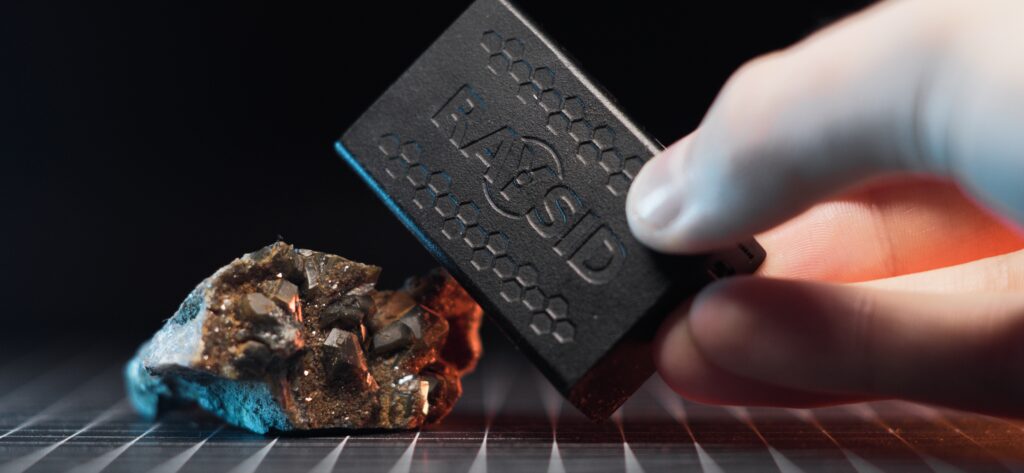
Even though Radio-Barite contains only trace amounts of radium, its radioactivity is detectable with most Geiger counters. My sample measures around 400 CPM on my Ludlum Model 3 with a 44-9 probe. The emitted gamma dose rate is rather low at approximately 0.12 µSv/h over background when measured with my RAYSID also at 1 cm distance.

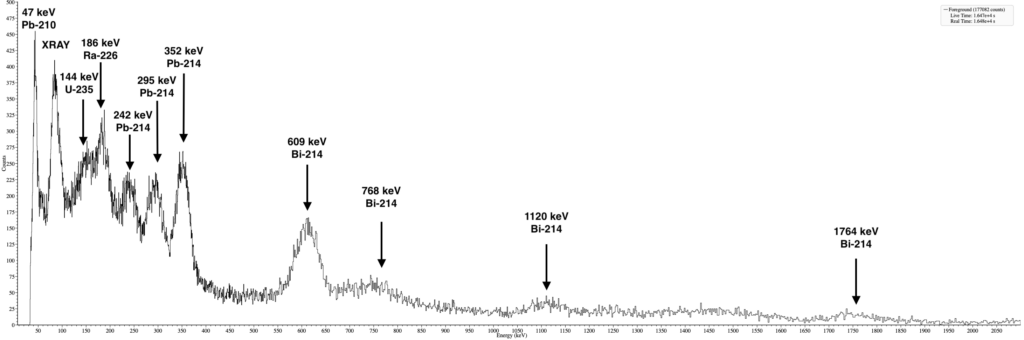
A quick gamma spectroscopy of my Radiobarite mineral revealed an interesting spectrum. I expected to see a clean Ra-226 spectrum but the peak at 144keV indicates the presence of Uranium. This is most likely due to impurities that were picked up by the mineral during its formation in a Uranium rich environment.

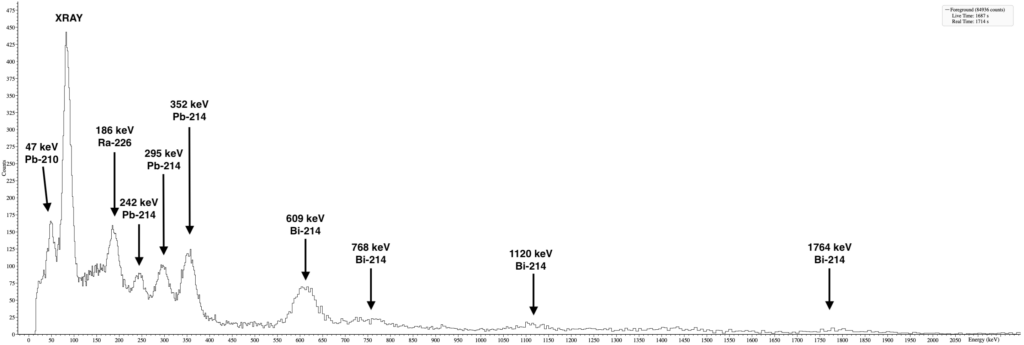
For comparison, here is a spectrum of pure Ra-226 from an old radium painted watch. While similar, the U235 peak at 144keV is missing which is distinctive feature between natural uranium and radium spectra.

A few final words

Exploring the geology and the radioactivity of my RadioBarite mineral sample was a lot of fun and I certainly learned a lot about it! I want to hear from you, did you know about the radioactive radio-barite before and do you have any samples of it? What other radioactive minerals should I cover in the future videos? Let me know in the comments below!


Thank you so much for reading this post, I hope you enjoyed it and learned something new! If yes, please make sure to subscribe to the email list so that you get notified when new posts are added. Also feel free to check out my Ko-Fi page where you can donate a nice cup of radioactive coffee and support my work financially.

and remember, stay active!