Gamma Spectroscopy – How to identify radioactive isotopes!

Welcome back my fellow radiation nerds. Today we are diving deep into the world of gamma spectroscopy and how can we use it to identify different radioactive isotopes.

So what is gamma spectroscopy?

Gamma spectroscopy is a technique used to identify and analyse different radioactive isotopes based on their characteristic gamma energies that they emit.

Although this technique has been around since the early 20th century, it was after World War II that the technology began to improve, particularly with the development of scintillation detectors, which allowed scientists to perform more detailed analyses of gamma-ray spectra.

By the 1970s, advances in semiconductor technology led to the creation of detectors like HPGe (High-Purity Germanium), which resolutions far surpassing what can be achieved with traditional scintillation crystals.

For much of its history, gamma spectroscopy has been an expensive tool available only to professionals but in recent years, companies like Gamma Spectacular have made it more accessible and affordable to hobbyists and amateurs alike.

Today, devices like the RAYSID fit can easily in a jeans pocket and still deliver excellent-quality gamma spectra, making gamma spectroscopy easier than ever. Long story short, we are currently in a golden age of gamma spectroscopy.

Scintillation Crystals

There are several methods for detecting and creating gamma spectra, but the most common is by using scintillation crystals. Each crystal type has its advantages and drawbacks and the choice which one to use really depends on the use case. Here are some of the most common ones

NaI(Tl) – Sodium Iodide Thalium Doped crystals are probably the most commonly used scintillation crystals and they are known for producing high-quality gamma spectra and being very sensitive to gamma radiation. However, they are hygroscopic (absorb moisture) and temperature-sensitive, making them better suited for controlled environments rather than in field use.

CsI(Tl) – Cesium Iodide, Thalium doped crystal outperform NaI(Tl) in pretty much every way. They are more durable, dont suffer from moisture absorption and produce better resolution. Their only shortcomings are that they are a bit more expensive and have slower light decay time. They are often used in small, portable scintillation devices like my RAYSID, which uses a 5 cm³ crystal that has a resolution of 6.5% at 662 keV.

BGO – Bismuth Germanate scintillation crystals are known for their density and excellent high energy gamma-ray efficiency. At 662 keV, they typically offer an energy resolution of around 10-12%, making them less suitable for gamma spectroscopy applications compared to other crystals..

LaBr3 – Lanthanum Bromide crystal are relatively new to the market but they quickly gained popularity due to their exceptionally high resolution of below 3.5% at 662keV. Unfortunately due to more difficult production process, they are significantly more expensive compared to more common options such as NaI(Tl or CsI(Tl). Since these crystals use Lanthanum, which by itself is a naturally radioactive due to the isotope La138, they self generate a Lanthanum 138 Gamma spectrum which has to be accounted for when conducting a spectroscopy of low activity samples.

Plastic Scintillators are also common and are made from organic polymers but they produce very low quality spectrum which is generally unsuitable for gamma spectroscopy. Their low price however makes them a great fit for detectors meant only for radiation detection.

HPGe – High purity germanium detectors are a bit different. Instead of scintillation crystal, they use semiconductors which results in extremely good resolution allowing to distinguish peaks that are very close in energy range. While they are the gold standard for resolution, they are less suited for casual use due to their size, high cost and difficult maintenance, as they require liquid nitrogen to keep them at their working temperature which is below 110 kelvin.

Crystal size plays a key role when it comes to gamma ray detection. Depending on what will be measured, it is important to take the size of the crystal into the consideration. For detecting low energy gamma rays and X-rays, it is better to use a thin crystal while for detecting higher energy gammas, a thicker crystal would be a preferred choice. For most cases a crystal size between 1-2″ will be perfectly fine

Photomultiplier tubes (PMT)

Photomultiplier tubes are essential as they convert small flashes of light produced during the interaction of the gamma rays with the scintillation crystal, into electric current which is directly proportional to the gamma energies detected. Their quality and performance will impact the final resolution of the gamma spectrum.

Some small portable devices such as my RAYSID use solid-state Silicone Photo Multipliers (SiPM) instead of the PMT found on bigger detectors. This is mainly because SiPM are more compact and don’t require high voltage to operate making better suited for small detectors.

Sometimes PMT don’t come with voltage dividers, which are crucial to supply adequate power to different pins of the tube. Generally the schematics are easily available online but if soldering is not your strong side, it might be better to get a pre-made kit or just buy a probe that is already assembled and ready to use.

My Scintillation probe

I got my Scintillator probe from my good friend GigaBecquerel (https://gigabecquerel.wordpress.com) who was kind enough to send me one of his spare ones and he also helped me with writing and fact checking this post. If you want to learn more about cool nuclear science projects, then I definitely recommend checking out his blog.

The probe itself is a Bicron 2M2/2 and it uses a 2×2″ NaI(Tl) Crystal which should give a resolution of 6.8% at 662keV. Thanks to the large crystal, the probe is very sensitive and it produces around 130CPS just from the background activity alone. Inside my lead castle, the activity drops to just 12 CPS.

Here is a detailed spec sheet of the detector: https://luxiumsolutions.com/sites/default/files/2021-09/s600-8468.pdf

A probes offered by Gamma Spectacular (affiliated):

1.5×1.5″ NaI(Tl) Detector: https://www.gammaspectacular.com/blue/gs-1515-nai?tracking=67a9140c956bd

2×2″ NaI(Tl) Detector: https://www.gammaspectacular.com/blue/GS-2020-NAI?tracking=67a9140c956bd

1.5×1.5″ CsI(Tl): https://www.gammaspectacular.com/blue/gs-1515-csi?tracking=67a9140c956bd

2×2″ CsI(Tl): https://www.gammaspectacular.com/blue/gs-2020-csi?tracking=67a9140c956bd

Spectrometers and the Gamma Spectacular GS-PRO-V5

A scintillator probe is however not enough to start making gamma spectrums. In order to connect the probe to the computer, we need a soundcard Multi-Channel-Analyser (MCA) Spectrometer which will power and convert gamma energies detected by the probe into a usable audio signal.

I’d like to thank Steven from Gamma Spectacular for supporting the channel and sending me one of the GS-PRO-V5 which has inspired this video in the first place.

The unit feels nice and solid and the initial setup was pretty simple and straight forward. It can be used with both single and dual cable probes and its voltage can be easily adjusted from 300 to 2000V making it compatible with a wide range of different detectors. The only change I would make is to move the USB C connector to the back of the device but I guess that is just a matter of personal preference.

There are several different softwares that can be used with Gamma Spectacular but since I personally prefer working on Mac computers, I will be using the IMPUSLE software which has some great features such as a simple and quick, multi-point calibration, and the “energy to bin” switch which makes it much easier to see small peaks from the high energy gamma rays like in the case of Thallium 208 found in the Thorium 232 decay chain.

Get your own Gamma Spectacular (affiliated link): https://www.gammaspectacular.com/blue/gs-pro-v5?tracking=67a9140c956bd

Lead castle and minimising background radiation

One last thing before we get started with creating gamma spectra.

Radioactivity is all around us and it is often referred to as background radiation. It can negatively affect the quality of the gamma spectrum and make it harder to see individual peaks especially when the activity o the sample is low. This is why it is why it is important to try to minimise it. For this purpose it is best to use lead shielding as it’s extremely dense making it very effective at cutting background out.

At the moment, I have two lead castles. The first one I made about three years ago to use with my RAYSID. It’s basically a paint can that has another, smaller can inside and the space between them is filled with lead which creates lead walls that are about 2cm thick from all sides.

While lead is great for shielding radiation, it can fluoresce and this results in a X-Ray peak at around 70-80keV. In order to reduce it, I added 2mm thick copper shielding on the inside of the castle.

Here is a spectrum of Cs137 before and after adding additional copper shielding. Pay attention to the Xray peak at 75keV in the spectrum in which copper shielding is missing

While this castle works great and I get inside only 1.2 CPS with my RAYSID compared to ~35CPS outside, it doesn’t work too well with my new, bigger setup. This lead me to building a second castle for my new setup that will work better with a larger detector.

I made it out of lead bricks that I’ve casted myself and while the castle isn’t yet finish by any means and I still need to make a few changes to it, I can already tell that I’m very happy with the fact that I can keep the detector inside at all time without the need to remove it to access the sample.

In the future I’m hoping to get some proffesional Chevron lead bricks which design eliminates any gaps between them allowing for even better background activity inside the castle.

Lead is toxic, so it’s best to avoid touching it with bare hands. I’ve painted my lead bricks to add a layer of protection which works well as it’s very easy to see when the paint starts to chip off and bricks need a repaint.

How does the set-up perform?

After connecting everything and configuring all the settings, I managed to get a nice 6.96% FWMH at 662keV. Maybe with some extra tweaking I can get the resolution to go even lower but I’m definitely happy with my current results.

While I do get slightly better resolution with my RAYSID with 6.5% at 662keV, this new setup is far more sensitive thanks to the much larger crystal.

Now let’s run some gamma spectrums. Each spectrum has been set to a total count of 100k.

Uranium Ore

Gamma Energies: 144, 186, 242, 295, 352, 609 keV


Radium 226 (Radium painted hand watch)

Gamma Energies: 186, 242, 295, 352, 609 keV


Thorium 232 (Gas Mantle)

Gamma Energies: 129, 239, 338, 583, 911, 969, 1588, 2615 keV


Lutetium 176 (LYSO Crystal)

Gamma Energies: 88, 202, 307 keV


Cesium 137 (Spark Gap Tube)

Gamma Energies: 31, 662 keV


Potassium 40 (Potassium Chloride Powder)

Gamma energies: 1461keV


Americium 241 (Smoke Detector)

Gamma Energies: 59.5 keV


Krypton 85 (Robotron Smoke Detector)

Gamma Energies: 514 keV


Conclusion

Since the day I started learning about radioactivity, I always wanted to be able not only to detect but also identify different radioactive isotopes. I love both of my gamma spectrometers and testing anything I can get my hands on and I can’t wait to do more experiments and tests with them!

My new setup with Gamma Spectacular is now permanently stationed by my desk, connected to my computer and ready to start a new spectrum at a moment’s notice, while my RAYSID travels with me as my daily carry radiation detector, always within reach. Both are excellent tools designed for different purposes and use cases, with the RAYSID offering convenience on the go, while the Gamma Spectacular delivering much higher sensitivity, better versitility and better efficiency.

I want to thank Steven from Gamma Spectacular once again for sending me the GS-PRO-V5 and supporting the channel. If you’d like to purchase a Gamma Spectacular for yourself, make sure to use one of my affiliated links, it doesn’t cost any extra and I get a little commission to fund future videos! Until March 31st, 2025, you can also use my code ALLRAD which will give you 5% off from your order. This code is however limited to the first 10 customers so make sure to use it while it last!

Get your own Gamma Spectacular kit (affiliated link): https://www.gammaspectacular.com/blue/GSB-1515-NAI?tracking=67a9140c956bd

Also make sure to check out GigaBecquerell’s blog and YouTube channel as he has some great content there!

I want to hear from you, do you have a gamma spectroscopy set-up and what devices do you use? Let me know in the comments below!


Thank you so much for reading this post, I hope you enjoyed it and learned something new! If yes, please make sure to subscribe to the email list so that you get notified when new posts are added. Also feel free to check out my Ko-Fi page where you can donate a nice cup of radioactive coffee and support my work financially.

and remember, stay active!
The Truth About Quantum Science Items

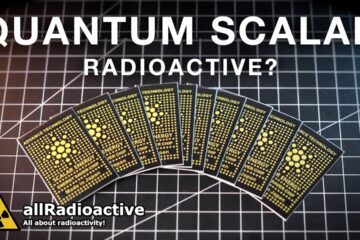
Welcome back my fellow radiation nerds. Today we will explore the radioactivity and the nonsense of some more quantum science, scalar energy quackery items sold on Amazon!

If you enjoy this content make sure to subscribe to my channel so you don’t miss any of the upcoming uploads. Thanks and now back to the video.

In the past I explored the radioactivity of two “Quantum Energy” pendants. In both cases they have turned out to be radioactive due to the Thorium content. Since then, most of those listings have been removed but occasionally they do pop up every now and then on websites such as Amazon.

Recently I was browsing through the internet and I found some “quantum energy”, stickers which I haven’t really explored before, so I decided to order them, and see if they will be radioactive.

Sticker Nr.1

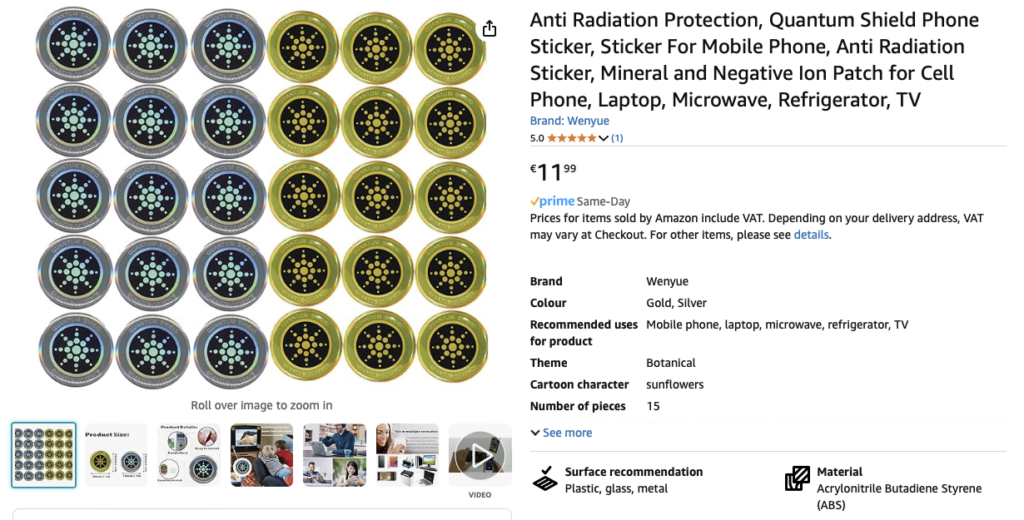
The first sticker was marketed as an anti radiation sticker that will protect the user from the “harmful” 5G radiation… Right. The definitely not photoshopped stock photos on the listing, recommend placing the stickers on all electrical devices such as phones, tablets, laptops and TVs…

Despite the stickers being marketed as anti radiation, I measured pretty decent radioactivity coming off of them. When measured from the front, I got a result of 250 CPM and 700 CPM when measured from the back of the sticker at 1cm distance, with my Ludlum Model 3 with a 44-9 probe. Im guessing that the silicon layer blocks some of the alpha and beta radiation resulting in lower activity from the front.

I was curious about how was the sticker constructed and which part in particular made it radioactive, so I used my trusty Swiss knife to peal its layers one by one and conducted a little autopsy of it.

The sticker is made of three parts, silicon top, shiny middle part and sticky brown layer at the bottom. After measuring each part separately I found that the brown bottom layer was the radioactive one.

Sticker Nr.2

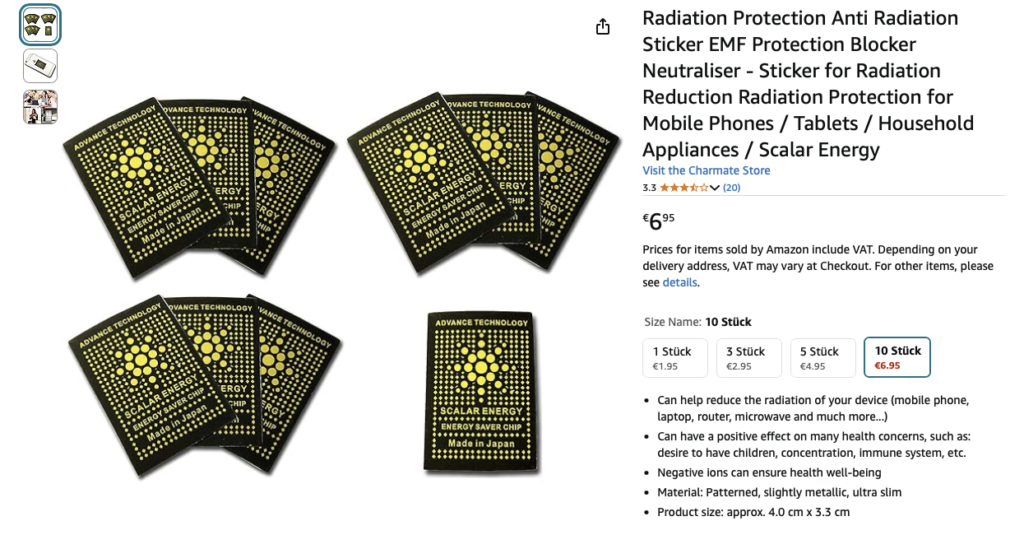
The second sticker was marketed as advance technology, Scalar Energy, Energy Saver, Made in Japan anti radiation protection…

and surprise surprise, when measured with my Ludlum Model 3 with 44-9 probe, I got a reading of over 2000 CPM at 1 cm distance.

Gamma spectroscopy and analysis of radioactive isotopes inside the stickers

The two pendants I explored before contain radioactive Thorium 232 and I was curious if that will also be the case with these stickers. To find out, I conducted a gamma spectroscopy with my RAYSID gamma spectrometer which revealed that both of the stickers contained radioactive Thorium 232 and its decay products.

Thorium ore (Monazite) is pretty common in China, in fact it’s much more common there than uranium which is why China is currently investing heavily into Thorium breeder reactors. I’m assuming Thorium is a waste product of Monazite processing as Monazite is rich in several other rare earth elements but I have absolutely no idea why is it being added to those stickers… I guess it at least makes a pretty cool check source for all of us nuclear nerds?

While those stickers are a pretty cool and relatively safe source to handle, their marketing is very misleading and they should definitely not be sold on Amazon or similar websites under their current description. Just remember that, some people still believe in tin foil hats…


Thank you so much for reading this post, I hope you enjoyed it and learned something new! If yes, please make sure to subscribe to the email list so that you get notified when new posts are added. Also feel free to check out my Ko-Fi page where you can donate a nice cup of radioactive coffee and support my work financially.

and remember, stay active!
Monazite – The Most Common Thorium Mineral!

Welcome my fellow radiation nerds! Today we explore the radioactivity and the geology of the most common Thorium mineral – Monazite!

Monazite is a brownish phosphate mineral, primarily known for containing several of the rare earth elements, including Lanthanum, Cerium, and Thorium. It scores between 5.0 and 5.5 on the Mohs scale of mineral hardness and has a density of 4.6–5.7 g/cm³.

Compared to other Thorium minerals, such as Thorianite (70–80% ThO2) or Thorite (5–20% ThO2), Monazite contains much less Thorium, at around 6-7%. However, its widespread availability makes it the most common Thorium ore, accounting for approximately 12-15% of the world’s total Thorium reserves.

Monazite is most often located in placer deposits of sand and gravel. It’s primarily found in countries like India, Brazil, South Africa, Australia and China but it can be also found in many other places around the globe.

Fun fact: China is a major producer of Monazite due to its demand for rare earth elements, which also results in a significant surplus of Thorium. This surplus is playing a key role in driving the development of Thorium reactors as a potential alternative to uranium-based ones. It is also partially why there are so many radioactive “Scalar Energy Negative Ion” devices from China, as they contain trace amounts of Thorium from the Monazite extraction process.

Variations of Monazite

Monazite is not a single mineral, but rather a group of minerals with very similar structures and properties but with slightly different dominant elements. There are several variations of Monazite, with five main types. Three of these variations contain radioactive Thorium while another three contain Lanthanum (La) which does have a naturally radioactive isotope of La-138, but its radioactivity is extremely low and generally difficult to detect, especially in the presence of Th-232.

  • monazite-(Ce), (Ce,La,Nd,Th)PO4 (the most common)
  • monazite-(La), (La,Ce,Nd)PO4
  • monazite-(Nd), (Nd,La,Ce)PO4
  • monazite-(Sm), (Sm,Gd,Ce,Th)PO4
  • monazite-(Pr), (Pr,Ce,Nd,Th)PO4

Mining History

Since Monazite is rich in the rare earth elements, it has been their primary source for many years.

In the 1880sCarl Auer von Welsbach was looking for a supplier of Thorium to produce his newly invented thoriated gas mantles. One day he noticed that Brazilian ships used Monazite sand as ballast, and soon, Brazil became a key supplier of Thorium for the production of the gas mantles

For many years, Brazilian and Indian Monazite dominated the industry. However, after World War II, much of the mining activity shifted to South Africa.

Unfortunately, due to the radioactive waste produced during Monazite processing, it was eventually phased out in favor of Bastnäsite in the 1960s, which contains much less Thorium making it safer to work with.

In the recent years, the growing interest in Thorium reactors as a potential alternative to Uranium reactors has sparked renewed interest in Thorium. This shift could lead to an increased demand for Thorium and possibly bring Monazite back into commercial use.

My Sample

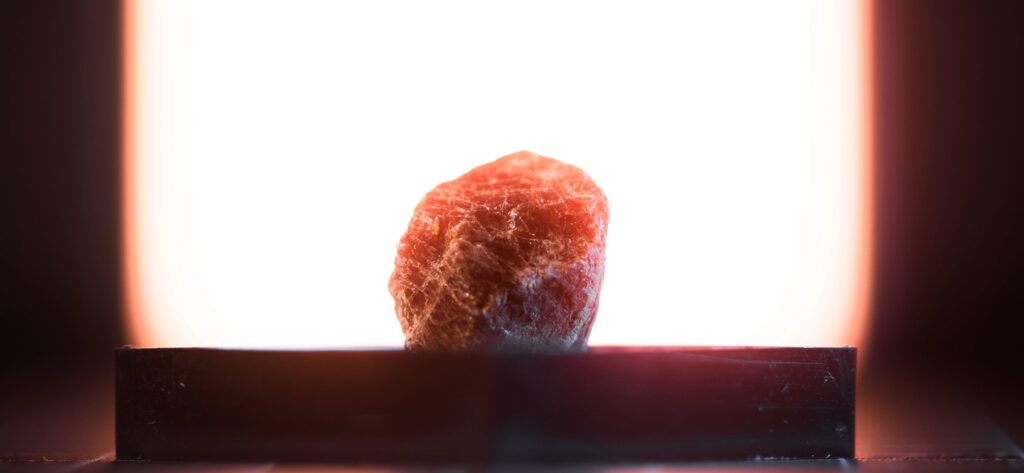
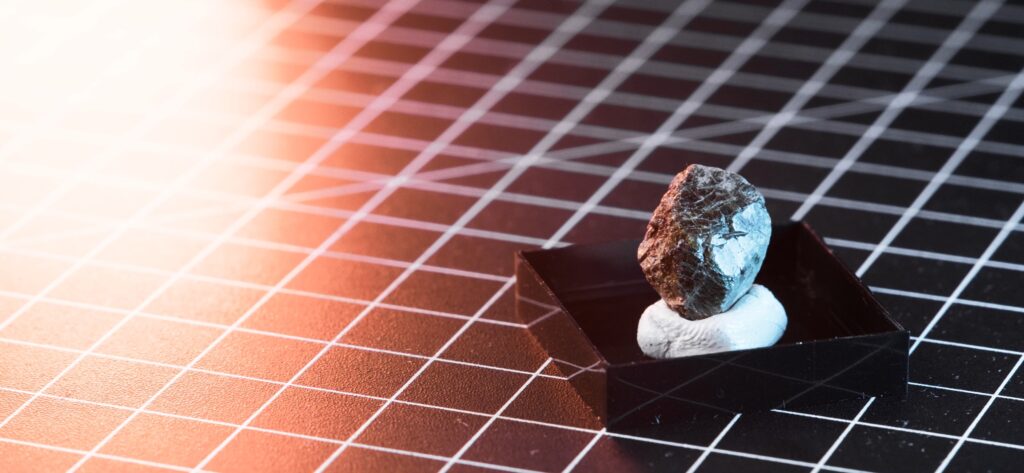
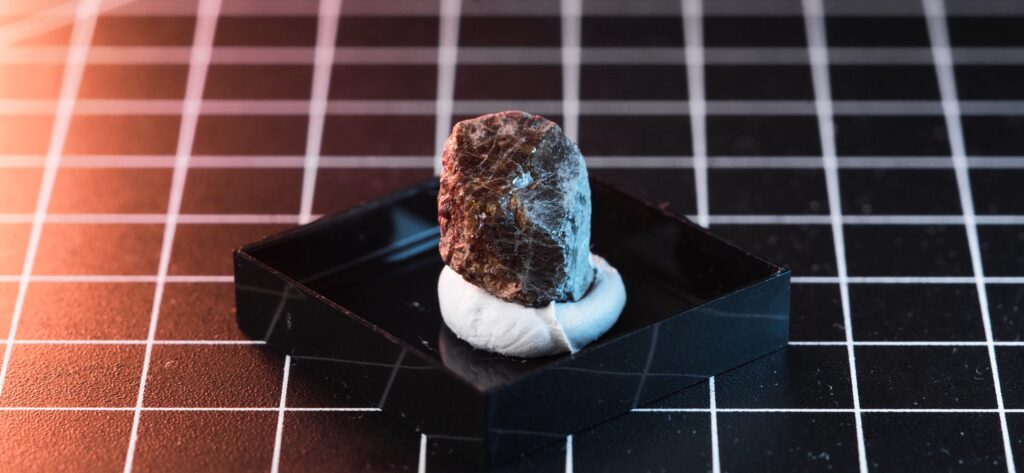
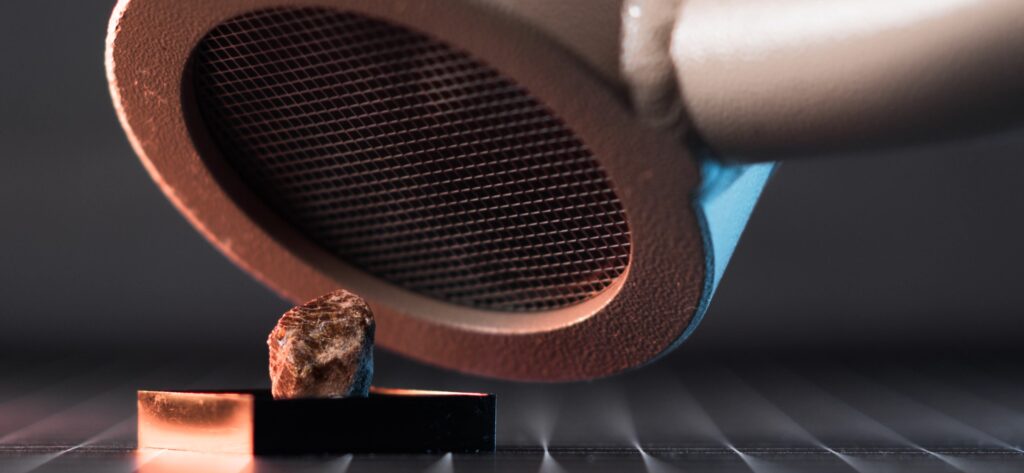
I acquired my sample at a recent mineral trade show. It’s the most common variation, Monazite-(Ce), and it comes from the Marijao Pegmatite region in Madagascar. Despite its small size, its radioactivity is easily detectable, reading around 2000 CPM on my Ludlum Model 3 with a 44-9 probe at a 1 cm distance.

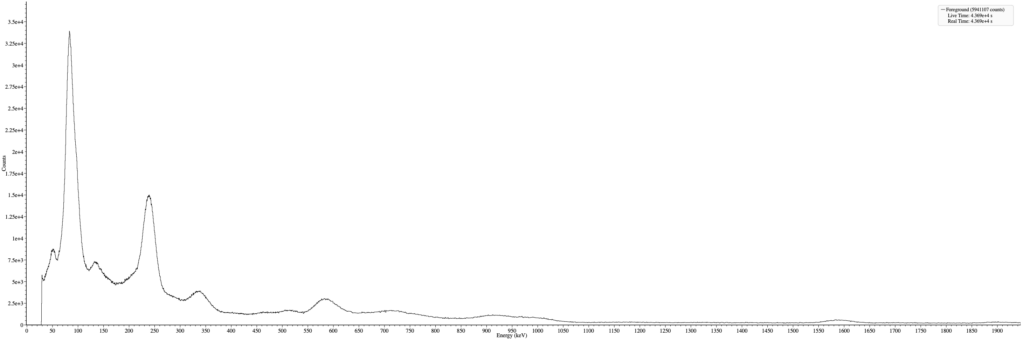
Although I already know from its chemical formula that Thorium is present, I decided to do a Gamma Spectrum of the sample with my RAYSID gamma spectrometer. As expected, it revealed peaks characteristic of the Thorium-232 and its decay chain.

Conclusion

I’d love to hear about your experiences with Monazite or other Thorium-containing minerals. Do you have any in your collection? Let me know in the comments below!


Thank you so much for reading this post, I hope you enjoyed it and learned something new! If yes, please make sure to subscribe to the email list so that you get notified when new posts are added. Also feel free to check out my Ko-Fi page where you can donate a nice cup of radioactive coffee and support my work financially.

and remember, stay active!
Ludlum Model 3 – The Best Meter I’ve Ever Used!

Welcome back my fellow radiation nerds! Today we will dive deep into what is arguably one of the best radiation meter out there, the Ludlum Model 3!

The history of Ludlum Meters

The Ludlum Measurements, Inc. was established in 1962 by Don Ludlum, who was an engineer with a background in designing radiation detection equipment. Not long after, it has produced its first commercially available meter, Ludlum Model 2. Ludlum’s official YouTube channel has a very interesting video on one of the very first units ever made with a serial number of 31, which I have linked in the description below.

His meters quickly gain popularity and good reputation for their reliability and long use life, which quickly established Ludlum Measurements as a trusted name in the world of radiation detection. The success of the initial models paved the way for the development of a wide range of survey meters and radiation detection equipment that continues to be used around the world to this today.

The versatility of Ludlum Meters.

Ludlum meters are the go to meters for many scientists and first responders, because of they are extremely rugged, reliable and easy to use design. Furthermore, Ludlum Measurements offers a wide range of probes and accessories which can be easily swapped out for various applications. Adding the long and proven track record, it is easy to see why Ludlum meters became the preferred choice for scientists worldwide.

Different Ludlum models

If you look at Ludlum’s product range, you will quickly realise that there are a bunch of different models out there. However for the personal use purpose, I think these are the ones worth considering.

Ludlum Model 2 – It is most basic, analog meter that Ludlum made (discontinued but can be found used). It has the 3 operating mode x0.1, x1, and x10 which might not be enough if you plan using it with sensitive detectors such as scintillator probes.

Ludlum Model 3 – A step up from Model 2. It offers extended measuring range (x100) and improved circuitry and electronics.

Ludlum Model 12 – Supports internal voltage measurement for easy switching between different probes which might require different operating voltage. For that reason, it also has an extended voltage range (400 to 2500 Vdc).

Ludlum Model 14c – Overall similar to Model 3, however it houses a small, gamma compensated GM tube which automatically operates when the scale is set to the x1000 mode.

Ludlum Model 2221 – Digital scaler/ratemeter with advanced data logging capabilities, often used for more precise and detailed measurements.

Ludlum Model 2241 – General-purpose scaler/ratemeter with a digital display.

There are plenty more of Ludlum models out there and if you want to learn more about them, I encourage you to read the detailed description on Ludlum website (click here).

Technical data and features of Ludlum Model 3

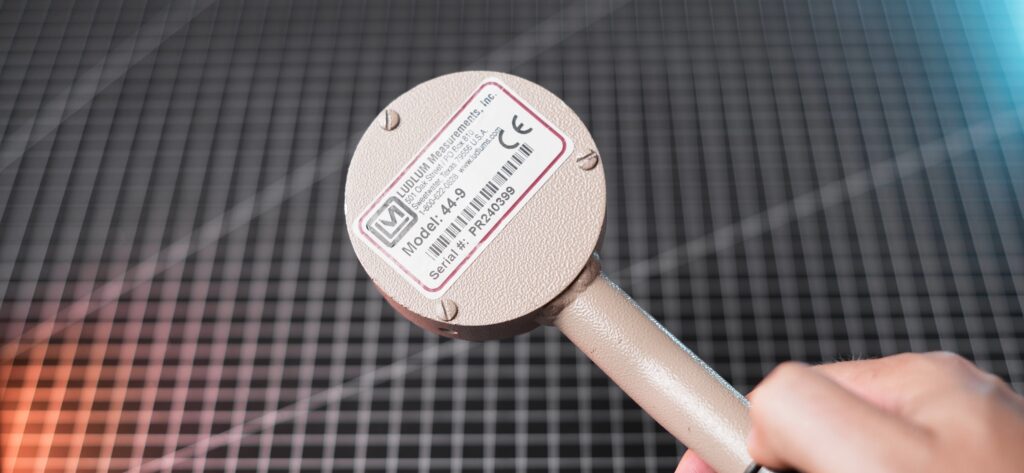
The Ludlum Model 3 has a range from 0 to 500,000 CPM and can supply voltage to the probe between 400 and 1500V. This flexibility allows it to work with a wide variety of detectors, including scintillators and some neutron detectors. Most of the time, I pair mine with a 44-9 probe, however I do change that occasionally depending on the situation

The meter features a rotary switch for selecting different measuring ranges and performing a battery test. It also includes both slow and fast averaging modes, which are particularly useful for obtaining accurate readings in varying conditions.

Powered by two D cell batteries, the Model 3 offers approximately 2000 hours of use. The batteries are housed in a separate compartment, which helps protect the electronics from potential damage in case of battery leakage. Additionally, all parts of the Ludlum Model 3 are sealed to prevent moisture from entering the meter, enhancing its durability.

These features clearly demonstrate that Ludlum meters are built to last and why they’ve earned their stellar reputation.

My Ludlum Model 3

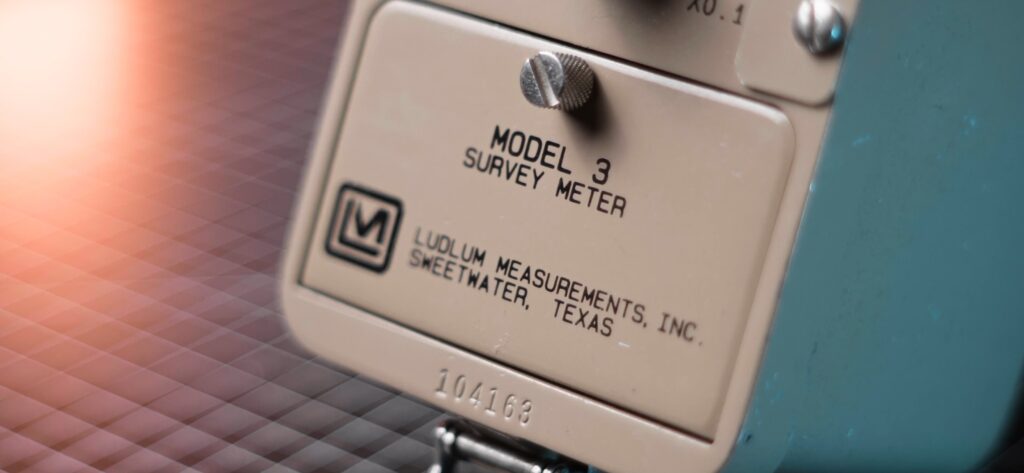
I acquired my Ludlum model 3 a few years ago, and it has been my primary meter ever since. It has a serial number of 104163 and it was manufactured on April 16th, 1992. Despite its age, it operates flawlessly, having only small scratches from regular use. In order to ensure accurate readings, I calibrated my unit using a pulser made by GEOelectronics.

My unit has meter face showing only CPM. If you have seen my previous video on how to measure radioactivity, you know I am not a fan of dose units when used to measure activity of samples, so this works perfect for me. Ludlum does offer different meter faces for different probes, however I’d still recommend to sticking with the CPM.

Originally, my meter came with a “C” type connector, which is common on most Ludlum devices. However, this connector is hard to come by in Europe, so I replaced it with a BNC connector. This modification has made it much easier to find compatible cables and probes. The meter also came equipped with latches for a strap, which, while I don’t use them often, are a handy addition for prolonged use, as the meter can get heavy. Lastly, I crafted a probe holder for my 44-9 from a sheet of metal. While it’s not the most aesthetically pleasing, it gets the job done. I’m also thinking about adding a check source holder to the side of my meter, however I can’t seem to find one for a good price.

How to buy a Ludlum meter?

So, you want to buy a Ludlum meter. But where can you find one?

If you’re set on a brand-new meter, you can purchase directly from the Ludlum website. However, be aware that their prices are generally aimed at labs and government agencies, not private individuals. A new Ludlum Model 3, for example, costs around $1,000, and that’s without any additional accessories or probes.

In my opinion, it’s a far better choice to buy a used (or refurbished) unit online. Labs occasionally clear out old inventory, and this is the best time to find used meters and probes at a relatively low price. I got my meter during one such sale for fraction of what a new one would cost me.

When evaluating a used meter, ensure it’s in good visual condition (no dents, corrosion on battery ports or cracked glass). Ludlum meters are mostly analog, making them easy and inexpensive to repair if any internal parts fail. This being said, I noticed that newer Ludlum meters are made with a PCB which use those micro components which are much harder to work with unless you have proper tools for it.

Alternatives to Ludlum

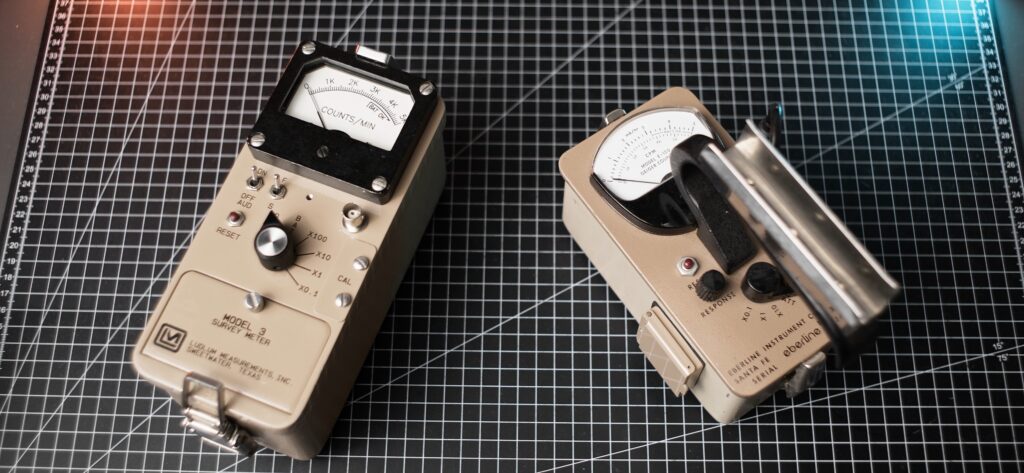
Ludlum isn’t the only company producing high-quality radiation meters. Brands like Eberline and Johnson also offer fantastic meters that are worth checking out, often at a lower cost than a Ludlum.

For example, I found my Eberline 120 survey meter (which is similar to a Ludlum model 2) that came with an HP260 probe and a check source holder for a total of 110 British pounds, including shipping!

Good deals are out there—you just need to be patient and keep an eye out, and eventually, one will pop up.

A few final words

Ludlum meters are the industry standard for a reason, and I highly recommend checking them out. Their professional build, high performance, and versatility are what led me to purchase one for myself, and I have absolutely no regrets.

I’m curious to hear about the meters you use for your measurements. Do you have, or are you planning on investing in, a Ludlum meter? Let me know in the comments!


Thank you so much for reading this post, I hope you enjoyed it and learned something new! If yes, please make sure to subscribe to the email list so that you get notified when new posts are added. Also feel free to check out my Ko-Fi page where you can donate a nice cup of radioactive coffee and support my work financially.

and remember, stay active!